T cell receptor beta variable 9
1_MGFRL 6_ LCCVA 11_ FCLLG 16_ AGPVD 21_ SGVTQ 26_ TPKHL 31_ ITATG 36_ QRVTL 41_ RCSPR 46_ SGDLS 51_ VYWYQ 56_ QSLDQ 61_ GLQFL 66_ IHYYN 71_ GEERA 76_ KGNIL 81_ ERFSA 86_ QQFPD 91_ LHSEL 96_ NLSSL 101_ ELGDS 106_ALYFC
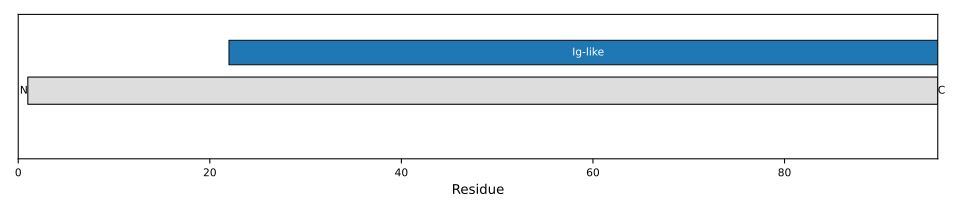
1: V region of the variable domain of T cell receptor (TR) beta chain that participates in the antigen recognition (PubMed:24600447). Alpha-beta T cell receptors are antigen specific receptors which are essential to the immune response and are present on the cell surface of T lymphocytes. Recognize peptide-major histocompatibility (MH) (pMH) complexes that are displayed by antigen presenting cells (APC), a prerequisite for efficient T cell adaptive immunity against pathogens (PubMed:25493333). Binding of alpha-beta TR to pMH complex initiates TR-CD3 clustering on the cell surface and intracellular activation of LCK that phosphorylates the ITAM motifs of CD3G, CD3D, CD3E and CD247 enabling the recruitment of ZAP70. In turn ZAP70 phosphorylates LAT, which recruits numerous signaling molecules to form the LAT signalosome. The LAT signalosome propagates signal branching to three major signaling pathways, the calcium, the mitogen-activated protein kinase (MAPK) kinase and the nuclear factor NF-kappa-B (NF-kB) pathways, leading to the mobilization of transcription factors that are critical for gene expression and essential for T cell growth and differentiation (PubMed:23524462). The T cell repertoire is generated in the thymus, by V-(D)-J rearrangement. This repertoire is then shaped by intrathymic selection events to generate a peripheral T cell pool of self-MH restricted, non-autoaggressive T cells. Post-thymic interaction of alpha-beta TR with the pMH complexes shapes TR structural and functional avidity (PubMed:15040585)