T cell receptor beta constant 2
1_DLKNV 6_ FPPKV 11_ AVFEP 16_ SEAEI 21_ SHTQK 26_ ATLVC 31_ LATGF 36_ YPDHV 41_ ELSWW 46_ VNGKE 51_ VHSGV 56_ STDPQ 61_ PLKEQ 66_ PALND 71_ SRYCL 76_ SSRLR 81_ VSATF 86_ WQNPR 91_ NHFRC 96_ QVQFY 101_ GLSEN 106_ DEWTQ 111_ DRAKP 116_ VTQIV 121_ SAEAW 126_ GRADC 131_ GFTSE 136_ SYQQG 141_ VLSAT 146_ ILYEI 151_ LLGKA 156_ TLYAV 161_ LVSAL 166_ VLMAM 171_VKRKD
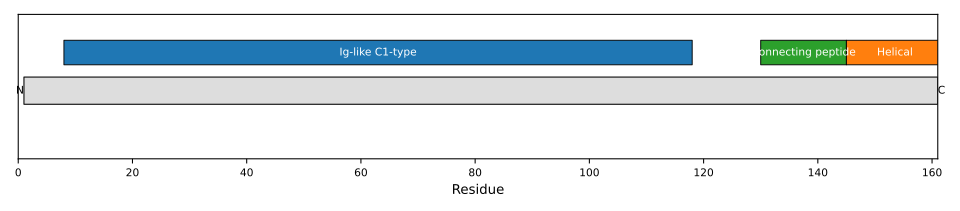
1: Constant region of T cell receptor (TR) beta chain (PubMed:24600447). Alpha-beta T cell receptors are antigen specific receptors which are essential to the immune response and are present on the cell surface of T lymphocytes. Recognize peptide-major histocompatibility (MH) (pMH) complexes that are displayed by antigen presenting cells (APC), a prerequisite for efficient T cell adaptive immunity against pathogens (PubMed:25493333). Binding of alpha-beta TR to pMH complex initiates TR-CD3 clustering on the cell surface and intracellular activation of LCK that phosphorylates the ITAM motifs of CD3G, CD3D, CD3E and CD247 enabling the recruitment of ZAP70. In turn, ZAP70 phosphorylates LAT, which recruits numerous signaling molecules to form the LAT signalosome. The LAT signalosome propagates signal branching to three major signaling pathways, the calcium, the mitogen-activated protein kinase (MAPK) kinase and the nuclear factor NF-kappa-B (NF-kB) pathways, leading to the mobilization of transcription factors that are critical for gene expression and essential for T cell growth and differentiation (PubMed:23524462). The T cell repertoire is generated in the thymus, by V-(D)-J rearrangement. This repertoire is then shaped by intrathymic selection events to generate a peripheral T cell pool of self-MH restricted, non-autoaggressive T cells. Post-thymic interaction of alpha-beta TR with the pMH complexes shapes TR structural and functional avidity (PubMed:15040585)