Very-long-chain (3R)-3-hydroxyacyl-CoA dehydratase 1 (EC 4.2.1.134) (3-hydroxyacyl-CoA dehydratase 1) (HACD1) (Cementum-attachment protein) (CAP) (Protein-tyrosine phosphatase-like member A)
1_MGRLT 6_ EAAAA 11_ GSGSR 16_ AAGWA 21_ GSPPT 26_ LLPLS 31_ PTSPR 36_ CAATM 41_ ASSDE 46_ DGTNG 51_ GASEA 56_ GEDRE 61_ APGER 66_ RRLGV 71_ LATAW 76_ LTFYD 81_ IAMTA 86_ GWLVL 91_ AIAMV 96_ RFYME 101_ KGTHR 106_ GLYKS 111_ IQKTL 116_ KFFQT 121_ FALLE 126_ IVHCL 131_ IGIVP 136_ TSVIV 141_ TGVQV 146_ SSRIF 151_ MVWLI 156_ THSIK 161_ PIQNE 166_ ESVVL 171_ FLVAW 176_ TVTEI 181_ TRYSF 186_ YTFSL 191_ LDHLP 196_ YFIKW 201_ ARYNF 206_ FIILY 211_ PVGVA 216_ GELLT 221_ IYAAL 226_ PHVKK 231_ TGMFS 236_ IRLPN 241_ KYNVS 246_ FDYYY 251_ FLLIT 256_ MASYI 261_ PLFPQ 266_ LYFHM 271_ LRQRR 276_ KVLHG 281_EVIVE
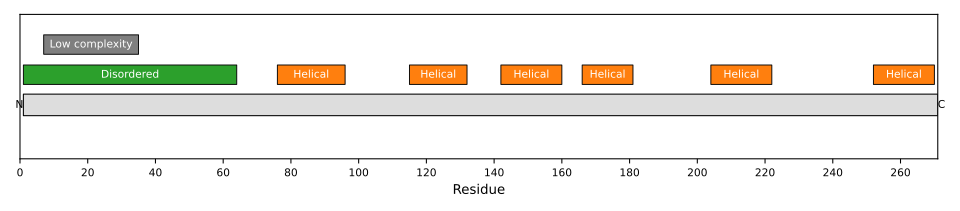
1: Catalyzes the third of the four reactions of the long-chain fatty acids elongation cycle. This endoplasmic reticulum-bound enzymatic process, allows the addition of two carbons to the chain of long- and very long-chain fatty acids/VLCFAs per cycle. This enzyme catalyzes the dehydration of the 3-hydroxyacyl-CoA intermediate into trans-2,3-enoyl-CoA, within each cycle of fatty acid elongation. Thereby, it participates in the production of VLCFAs of different chain lengths that are involved in multiple biological processes as precursors of membrane lipids and lipid mediators
2: In tooth development, may play a role in the recruitment and the differentiation of cells that contribute to cementum formation. May also bind hydroxyapatite and regulate its crystal nucleation to form cementum