Free fatty acid receptor 1 (G-protein coupled receptor 40)
1_MDLPP 6_ QLSFG 11_ LYVAA 16_ FALGF 21_ PLNVL 26_ AIRGA 31_ TAHAR 36_ LRLTP 41_ SLVYA 46_ LNLGC 51_ SDLLL 56_ TVSLP 61_ LKAVE 66_ ALASG 71_ AWPLP 76_ ASLCP 81_ VFAVA 86_ HFFPL 91_ YAGGG 96_ FLAAL 101_ SAGRY 106_ LGAAF 111_ PLGYQ 116_ AFRRP 121_ CYSWG 126_ VCAAI 131_ WALVL 136_ CHLGL 141_ VFGLE 146_ APGGW 151_ LDHSN 156_ TSLGI 161_ NTPVN 166_ GSPVC 171_ LEAWD 176_ PASAG 181_ PARFS 186_ LSLLL 191_ FFLPL 196_ AITAF 201_ CYVGC 206_ LRALA 211_ RSGLT 216_ HRRKL 221_ RAAWV 226_ AGGAL 231_ LTLLL 236_ CVGPY 241_ NASNV 246_ ASFLY 251_ PNLGG 256_ SWRKL 261_ GLITG 266_ AWSVV 271_ LNPLV 276_ TGYLG 281_ RGPGL 286_ KTVCA 291_ARTQG
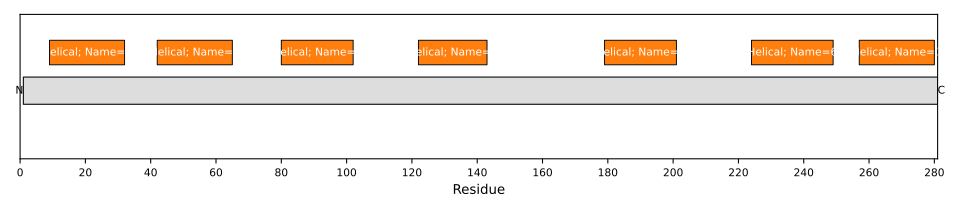
1: G-protein coupled receptor for medium and long chain saturated and unsaturated fatty acids that plays an important role in glucose homeostasis. Fatty acid binding increases glucose-stimulated insulin secretion, and may also enhance the secretion of glucagon-like peptide 1 (GLP-1). May also play a role in bone homeostasis; receptor signaling activates pathways that inhibit osteoclast differentiation (By similarity). Ligand binding leads to a conformation change that triggers signaling via G-proteins that activate phospholipase C, leading to an increase of the intracellular calcium concentration. Seems to act through a G(q) and G(i)-mediated pathway. Mediates the anti-inflammatory effects of omega-3 polyunsaturated fatty acids (PUFAs) via inhibition of NLRP3 inflammasome activation