Free fatty acid receptor 3 (G-protein coupled receptor 41)
1_MDTGP 6_ DQSYF 11_ SGNHW 16_ FVFSV 21_ YLLTF 26_ LVGLP 31_ LNLLA 36_ LVVFV 41_ GKLQR 46_ RPVAV 51_ DVLLL 56_ NLTAS 61_ DLLLL 66_ LFLPF 71_ RMVEA 76_ ANGMH 81_ WPLPF 86_ ILCPL 91_ SGFIF 96_ FTTIY 101_ LTALF 106_ LAAVS 111_ IERFL 116_ SVAHP 121_ LWYKT 126_ RPRLG 131_ QAGLV 136_ SVACW 141_ LLASA 146_ HCSVV 151_ YVIEF 156_ SGDIS 161_ HSQGT 166_ NGTCY 171_ LEFRK 176_ DQLAI 181_ LLPVR 186_ LEMAV 191_ VLFVV 196_ PLIIT 201_ SYCYS 206_ RLVWI 211_ LGRGG 216_ SHRRQ 221_ RRVAG 226_ LLAAT 231_ LLNFL 236_ VCFGP 241_ YNVSH 246_ VVGYI 251_ CGESP 256_ AWRIY 261_ VTLLS 266_ TLNSC 271_ VDPFV 276_ YYFSS 281_ SGFQA 286_ DFHEL 291_ LRRLC 296_ GLWGQ 301_ WQQES 306_ SMELK 311_ EQKGG 316_ EEQRA 321_ DRPAE 326_ RKTSE 331_ HSQGC 336_ GTGGQ 341_VACAE
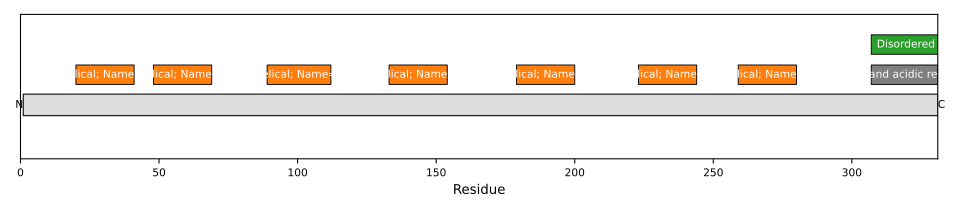
1: G protein-coupled receptor that is activated by a major product of dietary fiber digestion, the short chain fatty acids (SCFAs), and that plays a role in the regulation of whole-body energy homeostasis and in intestinal immunity. In omnivorous mammals, the short chain fatty acids acetate, propionate and butyrate are produced primarily by the gut microbiome that metabolizes dietary fibers. SCFAs serve as a source of energy but also act as signaling molecules. That G protein-coupled receptor is probably coupled to the pertussis toxin-sensitive, G(i/o)-alpha family of G proteins. Its activation results in the formation of inositol 1,4,5-trisphosphate, the mobilization of intracellular calcium, the phosphorylation of the MAPK3/ERK1 and MAPK1/ERK2 kinases and the inhibition of intracellular cAMP accumulation (PubMed:12711604). Activated by SCFAs and by beta-hydroxybutyrate, a ketone body produced by the liver upon starvation, it inhibits N-type calcium channels and modulates the activity of sympathetic neurons through a signaling cascade involving the beta and gamma subunits of its coupled G protein, phospholipase C and MAP kinases. Thereby, it may regulate energy expenditure through the control of the sympathetic nervous system that controls for instance heart rate. Upon activation by SCFAs accumulating in the intestine, it may also signal to the brain via neural circuits which in turn would regulate intestinal gluconeogenesis. May also control the production of hormones involved in whole-body energy homeostasis. May for instance, regulate blood pressure through renin secretion. May also regulate secretion of the PYY peptide by enteroendocrine cells and control gut motility, intestinal transit rate, and the harvesting of energy from SCFAs produced by gut microbiota. May also indirectly regulate the production of LEP/Leptin, a hormone acting on the CNS to inhibit food intake, in response to the presence of short-chain fatty acids in the intestine. Finally, may also play a role in glucose homeostasis. Besides its role in energy homeostasis, may play a role in intestinal immunity. May mediate the activation of the inflammatory and immune response by SCFAs in the gut, regulating the rapid production of chemokines and cytokines by intestinal epithelial cells. Among SCFAs, the fatty acids containing less than 6 carbons, the most potent activators are probably propionate, butyrate and pentanoate while acetate is a poor activator (PubMed:12496283, PubMed:12711604)