Interferon-inducible protein AIM2 (Absent in melanoma 2)
1_MESKY 6_ KEILL 11_ LTGLD 16_ NITDE 21_ ELDRF 26_ KFFLS 31_ DEFNI 36_ ATGKL 41_ HTANR 46_ IQVAT 51_ LMIQN 56_ AGAVS 61_ AVMKT 66_ IRIFQ 71_ KLNYM 76_ LLAKR 81_ LQEEK 86_ EKVDK 91_ QYKSV 96_ TKPKP 101_ LSQAE 106_ MSPAA 111_ SAAIR 116_ NDVAK 121_ QRAAP 126_ KVSPH 131_ VKPEQ 136_ KQMVA 141_ QQESI 146_ REGFQ 151_ KRCLP 156_ VMVLK 161_ AKKPF 166_ TFETQ 171_ EGKQE 176_ MFHAT 181_ VATEK 186_ EFFFV 191_ KVFNT 196_ LLKDK 201_ FIPKR 206_ IIIIA 211_ RYYRH 216_ SGFLE 221_ VNSAS 226_ RVLDA 231_ ESDQK 236_ VNVPL 241_ NIIRK 246_ AGETP 251_ KINTL 256_ QTQPL 261_ GTIVN 266_ GLFVV 271_ QKVTE 276_ KKKNI 281_ LFDLS 286_ DNTGK 291_ MEVLG 296_ VRNED 301_ TMKCK 306_ EGDKV 311_ RLTFF 316_ TLSKN 321_ GEKLQ 326_ LTSGV 331_ HSTIK 336_VIKAK
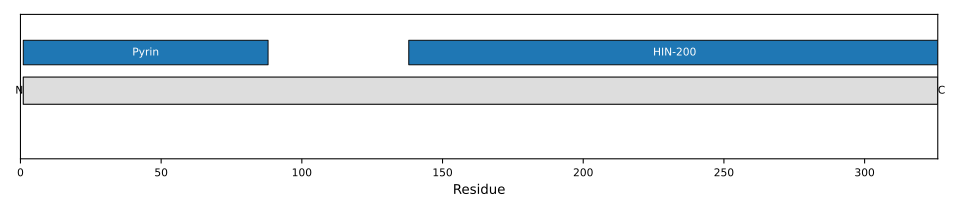
1: Sensor component of the AIM2 inflammasome, which mediates inflammasome activation in response to the presence of double-stranded DNA (dsDNA) in the cytosol, leading to subsequent pyroptosis (PubMed:17726700, PubMed:19158675, PubMed:19158676, PubMed:19158679, PubMed:20566831, PubMed:23530044, PubMed:26197926, PubMed:26583071, PubMed:29440442, PubMed:33980849, PubMed:37364111). Inflammasomes are supramolecular complexes that assemble in the cytosol in response to pathogens and other damage-associated signals and play critical roles in innate immunity and inflammation (PubMed:17726700, PubMed:19158675, PubMed:19158676, PubMed:19158679, PubMed:20566831, PubMed:26197926, PubMed:29440442, PubMed:33980849). Acts as a recognition receptor (PRR): specifically recognizes and binds dsDNA in the cytosol, and mediates the formation of the inflammasome polymeric complex composed of AIM2, CASP1 and PYCARD/ASC (PubMed:17726700, PubMed:19158675, PubMed:19158676, PubMed:19158679, PubMed:20566831, PubMed:26197926, PubMed:29440442, PubMed:33980849). Recruitment of pro-caspase-1 (proCASP1) to the AIM2 inflammasome promotes caspase-1 (CASP1) activation, which subsequently cleaves and activates inflammatory cytokines IL1B and IL18 and gasdermin-D (GSDMD), promoting cytokine secretion (PubMed:17726700, PubMed:19158675, PubMed:19158676, PubMed:19158679, PubMed:20566831). In some cells, CASP1 activation mediates cleavage and activation of GSDMD, triggering pyroptosis without promoting cytokine secretion (PubMed:19158675, PubMed:19158676). Detects cytosolic dsDNA of viral and bacterial origin in a non-sequence-specific manner (PubMed:17726700, PubMed:19158675, PubMed:19158676, PubMed:19158679, PubMed:20566831, PubMed:26197926, PubMed:26583071, PubMed:29440442, PubMed:33980849). Involved in the DNA damage response caused by acute ionizing radiation by mediating pyroptosis of intestinal epithelial cells and bone marrow cells in response to double-strand DNA breaks (By similarity). Mechanistically, AIM2 senses DNA damage in the nucleus to mediate inflammasome assembly and inflammatory cell death (By similarity). Also acts as a regulator of neurodevelopment via its role in the DNA damage response: acts by promoting neural cell death in response to DNA damage in the developing brain, thereby purging genetically compromised cells of the central nervous system (By similarity). Pyroptosis mediated by the AIM2 inflammasome in response to DNA damage is dependent on GSDMD without involving IL1B and IL18 cytokine secretion (By similarity). Also acts as a mediator of pyroptosis, necroptosis and apoptosis (PANoptosis), an integral part of host defense against pathogens, in response to bacterial infection (By similarity). Can also trigger PYCARD/ASC-dependent, caspase-1-independent cell death that involves caspase-8 (CASP8) (By similarity)
2: Also acts as a tumor suppressor independently of its role in inflammatory response (PubMed:16432157). Able to suppress overt cell proliferation in enterocytes: restricts stem cell proliferation in the intestinal mucosa in an inflammasome-independent manner, contributing to a decrease in the likelihood of colorectal cancer development (By similarity). AIM2 suppresses cell proliferation by inhibiting phosphorylation of AKT1 at 'Ser-473', preventing AKT1 activation and AKT-mTOR signaling pathway (By similarity). Inhibits AKT1 phosphorylation both by inhibiting the activity of PRKDC/DNA-PK kinase and promoting dephosphorylation by PP2A phosphatase (By similarity). Also acts as a key regulator of regulatory T-cells (Treg) homeostasis by promoting their stability: acts by preventing AKT1 activation (By similarity). Its role in Treg homeostasis is important to restain autoimmune diseases (By similarity)