Ubiquitin D (Diubiquitin) (Ubiquitin-like protein FAT10)
1_MAPNA 6_ SCLCV 11_ HVRSE 16_ EWDLM 21_ TFDAN 26_ PYDSV 31_ KKIKE 36_ HVRSK 41_ TKVPV 46_ QDQVL 51_ LLGSK 56_ ILKPR 61_ RSLSS 66_ YGIDK 71_ EKTIH 76_ LTLKV 81_ VKPSD 86_ EELPL 91_ FLVES 96_ GDEAK 101_ RHLLQ 106_ VRRSS 111_ SVAQV 116_ KAMIE 121_ TKTGI 126_ IPETQ 131_ IVTCN 136_ GKRLE 141_ DGKMM 146_ ADYGI 151_ RKGNL 156_LFLAC
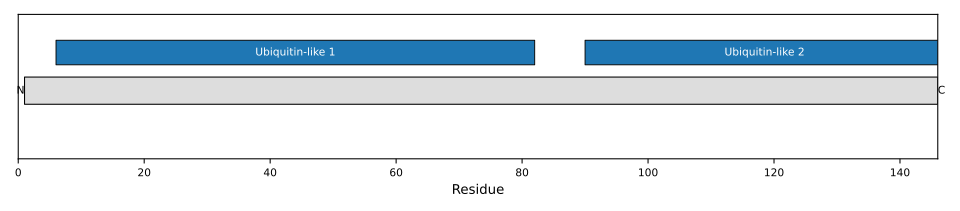
1: Ubiquitin-like protein modifier which can be covalently attached to target proteins and subsequently leads to their degradation by the 26S proteasome, in a NUB1-dependent manner (PubMed:15831455, PubMed:16707496, PubMed:19166848). Conjugation to the target protein is activated by UBA6 via adenylation of its C-terminal glycine (PubMed:17889673, PubMed:35970836). Promotes the expression of the proteasome subunit beta type-9 (PSMB9/LMP2). Regulates TNF-alpha-induced and LPS-mediated activation of the central mediator of innate immunity NF-kappa-B by promoting TNF-alpha-mediated proteasomal degradation of ubiquitinated-I-kappa-B-alpha (PubMed:19959714). Required for TNF-alpha-induced p65 nuclear translocation in renal tubular epithelial cells (RTECs). May be involved in dendritic cell (DC) maturation, the process by which immature dendritic cells differentiate into fully competent antigen-presenting cells that initiate T-cell responses (PubMed:19028597). Mediates mitotic non-disjunction and chromosome instability, in long-term in vitro culture and cancers, by abbreviating mitotic phase and impairing the kinetochore localization of MAD2L1 during the prometaphase stage of the cell cycle (PubMed:16495226). May be involved in the formation of aggresomes when proteasome is saturated or impaired (PubMed:19033385). Mediates apoptosis in a caspase-dependent manner, especially in renal epithelium and tubular cells during renal diseases such as polycystic kidney disease and Human immunodeficiency virus (HIV)-associated nephropathy (HIVAN) (PubMed:16495380)