Free fatty acid receptor 2 (G-protein coupled receptor 43)
1_MLPDW 6_ KSSLI 11_ LMAYI 16_ IIFLT 21_ GLPAN 26_ LLALR 31_ AFVGR 36_ IRQPQ 41_ PAPVH 46_ ILLLS 51_ LTLAD 56_ LLLLL 61_ LLPFK 66_ IIEAA 71_ SNFRW 76_ YLPKV 81_ VCALT 86_ SFGFY 91_ SSIYC 96_ STWLL 101_ AGISI 106_ ERYLG 111_ VAFPV 116_ QYKLS 121_ RRPLY 126_ GVIAA 131_ LVAWV 136_ MSFGH 141_ CTIVI 146_ IVQYL 151_ NTTEQ 156_ VRSGN 161_ EITCY 166_ ENFTD 171_ NQLDV 176_ VLPVR 181_ LELCL 186_ VLFFI 191_ PMAVT 196_ IFCYW 201_ RFVWI 206_ MLSQP 211_ LVGAQ 216_ RRRRA 221_ VGLAV 226_ VTLLN 231_ FLVCF 236_ GPYNV 241_ SHLVG 246_ YHQRK 251_ SPWWR 256_ SIAVV 261_ FSSLN 266_ ASLDP 271_ LLFYF 276_ SSSVV 281_ RRAFG 286_ RGLQV 291_ LRNQG 296_ SSLLG 301_ RRGKD 306_ TAEGT 311_ NEDRG 316_ VGQGE 321_GMPSS
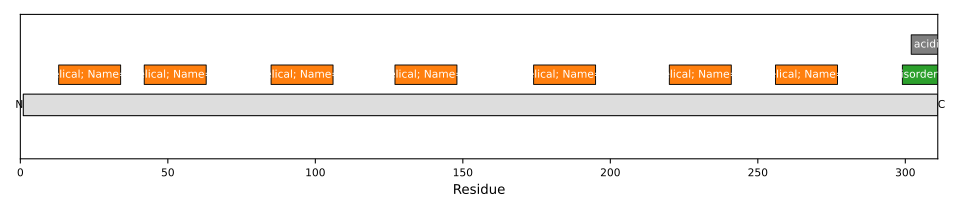
1: G protein-coupled receptor that is activated by a major product of dietary fiber digestion, the short chain fatty acids (SCFAs), and that plays a role in the regulation of whole-body energy homeostasis and in intestinal immunity. In omnivorous mammals, the short chain fatty acids acetate, propionate and butyrate are produced primarily by the gut microbiome that metabolizes dietary fibers. SCFAs serve as a source of energy but also act as signaling molecules. That G protein-coupled receptor is probably coupled to the pertussis toxin-sensitive, G(i/o)-alpha family of G proteins but also to the Gq family (PubMed:12496283, PubMed:12711604, PubMed:23589301). Its activation results in the formation of inositol 1,4,5-trisphosphate, the mobilization of intracellular calcium, the phosphorylation of the MAPK3/ERK1 and MAPK1/ERK2 kinases and the inhibition of intracellular cAMP accumulation. May play a role in glucose homeostasis by regulating the secretion of GLP-1, in response to short-chain fatty acids accumulating in the intestine. May also regulate the production of LEP/Leptin, a hormone acting on the central nervous system to inhibit food intake. Finally, may also regulate whole-body energy homeostasis through adipogenesis regulating both differentiation and lipid storage of adipocytes. In parallel to its role in energy homeostasis, may also mediate the activation of the inflammatory and immune responses by SCFA in the intestine, regulating the rapid production of chemokines and cytokines. May also play a role in the resolution of the inflammatory response and control chemotaxis in neutrophils. In addition to SCFAs, may also be activated by the extracellular lectin FCN1 in a process leading to activation of monocytes and inducing the secretion of interleukin-8/IL-8 in response to the presence of microbes (PubMed:21037097). Among SCFAs, the fatty acids containing less than 6 carbons, the most potent activators are probably acetate, propionate and butyrate (PubMed:12496283, PubMed:12711604). Exhibits a SCFA-independent constitutive G protein-coupled receptor activity (PubMed:23066016)