G-protein coupled receptor 39
1_MASPS 6_ LPGSD 11_ CSQII 16_ DHSHV 21_ PEFEV 26_ ATWIK 31_ ITLIL 36_ VYLII 41_ FVMGL 46_ LGNSA 51_ TIRVT 56_ QVLQK 61_ KGYLQ 66_ KEVTD 71_ HMVSL 76_ ACSDI 81_ LVFLI 86_ GMPME 91_ FYSII 96_ WNPLT 101_ TSSYT 106_ LSCKL 111_ HTFLF 116_ EACSY 121_ ATLLH 126_ VLTLS 131_ FERYI 136_ AICHP 141_ FRYKA 146_ VSGPC 151_ QVKLL 156_ IGFVW 161_ VTSAL 166_ VALPL 171_ LFAMG 176_ TEYPL 181_ VNVPS 186_ HRGLT 191_ CNRSS 196_ TRHHE 201_ QPETS 206_ NMSIC 211_ TNLSS 216_ RWTVF 221_ QSSIF 226_ GAFVV 231_ YLVVL 236_ LSVAF 241_ MCWNM 246_ MQVLM 251_ KSQKG 256_ SLAGG 261_ TRPPQ 266_ LRKSE 271_ SEESR 276_ TARRQ 281_ TIIFL 286_ RLIVV 291_ TLAVC 296_ WMPNQ 301_ IRRIM 306_ AAAKP 311_ KHDWT 316_ RSYFR 321_ AYMIL 326_ LPFSE 331_ TFFYL 336_ SSVIN 341_ PLLYT 346_ VSSQQ 351_ FRRVF 356_ VQVLC 361_ CRLSL 366_ QHANH 371_ EKRLR 376_ VHAHS 381_ TTDSA 386_ RFVQR 391_ PLLFA 396_ SRRQS 401_ SARRT 406_ EKIFL 411_ STFQS 416_ EAEPQ 421_ SKSQS 426_ LSLES 431_ LEPNS 436_ GAKPA 441_ NSAAE 446_NGFQE
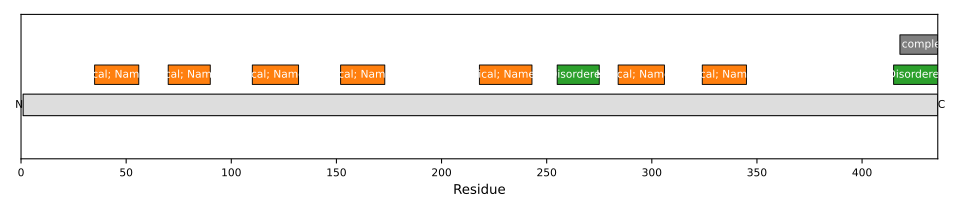
1: Zinc-sensing receptor that can sense changes in extracellular Zn(2+), mediate Zn(2+) signal transmission, and participates in the regulation of numerous physiological processes including glucose homeostasis regulation, gastrointestinal mobility, hormone secretion and cell death (PubMed:18180304). Activation by Zn(2+) in keratinocytes increases the intracellular concentration of Ca(2+) and activates the ERK/MAPK and PI3K/AKT signaling pathways leading to epithelial repair (PubMed:20522546). Plays an essential role in normal wound healing by inducing the production of cytokines including the major inflammatory cytokine IL6 via the PKC/MAPK/CEBPB pathway (By similarity). Regulates adipose tissue metabolism, especially lipolysis, and regulates the function of lipases, such as hormone-sensitive lipase and adipose triglyceride lipase (By similarity). Plays a role in the inhibition of cell death and protects against oxidative, endoplasmic reticulum and mitochondrial stress by inducing secretion of the cytoprotective pigment epithelium-derived growth factor (PEDF) and probably other protective transcripts in a GNA13/RHOA/SRE-dependent manner (PubMed:18180304). Forms dynamic heteroreceptor complexes with HTR1A and GALR1 depending on cell type or specific physiological states, resulting in signaling diversity: HTR1A-GPR39 shows additive increase in signaling along the serum response element (SRE) and NF-kappa-B pathways while GALR1 acts as an antagonist blocking SRE (PubMed:26365466)