5'-AMP-activated protein kinase subunit beta-2 (AMPK subunit beta-2)
1_MGNTT 6_ SDRVS 11_ GERHG 16_ AKAAR 21_ SEGAG 26_ GHAPG 31_ KEHKI 36_ MVGST 41_ DDPSV 46_ FSLPD 51_ SKLPG 56_ DKEFV 61_ SWQQD 66_ LEDSV 71_ KPTQQ 76_ ARPTV 81_ IRWSE 86_ GGKEV 91_ FISGS 96_ FNNWS 101_ TKIPL 106_ IKSHN 111_ DFVAI 116_ LDLPE 121_ GEHQY 126_ KFFVD 131_ GQWVH 136_ DPSEP 141_ VVTSQ 146_ LGTIN 151_ NLIHV 156_ KKSDF 161_ EVFDA 166_ LKLDS 171_ MESSE 176_ TSCRD 181_ LSSSP 186_ PGPYG 191_ QEMYA 196_ FRSEE 201_ RFKSP 206_ PILPP 211_ HLLQV 216_ ILNKD 221_ TNISC 226_ DPALL 231_ PEPNH 236_ VMLNH 241_ LYALS 246_ IKDSV 251_ MVLSA 256_ THRYK 261_ KKYVT 266_TLLYK
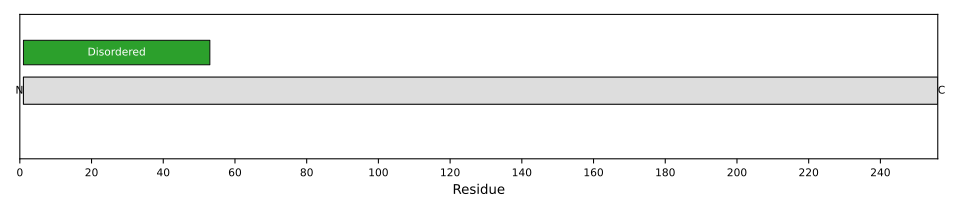
1: Non-catalytic subunit of AMP-activated protein kinase (AMPK), an energy sensor protein kinase that plays a key role in regulating cellular energy metabolism. In response to reduction of intracellular ATP levels, AMPK activates energy-producing pathways and inhibits energy-consuming processes: inhibits protein, carbohydrate and lipid biosynthesis, as well as cell growth and proliferation. AMPK acts via direct phosphorylation of metabolic enzymes, and by longer-term effects via phosphorylation of transcription regulators. Also acts as a regulator of cellular polarity by remodeling the actin cytoskeleton; probably by indirectly activating myosin. Beta non-catalytic subunit acts as a scaffold on which the AMPK complex assembles, via its C-terminus that bridges alpha (PRKAA1 or PRKAA2) and gamma subunits (PRKAG1, PRKAG2 or PRKAG3)