BCL2/adenovirus E1B 19 kDa protein-interacting protein 3-like (Adenovirus E1B19K-binding protein B5) (BCL2/adenovirus E1B 19 kDa protein-interacting protein 3A) (NIP3-like protein X) (NIP3L)
1_MSSHL 6_ VEPPP 11_ PLHNN 16_ NNNCE 21_ ENEQS 26_ LPPPA 31_ GLNSS 36_ WVELP 41_ MNSSN 46_ GNDNG 51_ NGKNG 56_ GLEHV 61_ PSSSS 66_ IHNGD 71_ MEKIL 76_ LDAQH 81_ ESGQS 86_ SSRGS 91_ SHCDS 96_ PSPQE 101_ DGQIM 106_ FDVEM 111_ HTSRD 116_ HSSQS 121_ EEEVV 126_ EGEKE 131_ VEALK 136_ KSADW 141_ VSDWS 146_ SRPEN 151_ IPPKE 156_ FHFRH 161_ PKRSV 166_ SLSMR 171_ KSGAM 176_ KKGGI 181_ FSAEF 186_ LKVFI 191_ PSLFL 196_ SHVLA 201_ LGLGI 206_ YIGKR 211_LSTPS
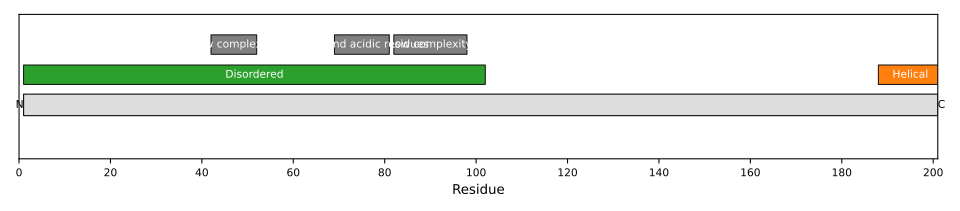
1: Induces apoptosis. Interacts with viral and cellular anti-apoptosis proteins. Can overcome the suppressors BCL-2 and BCL-XL, although high levels of BCL-XL expression will inhibit apoptosis. Inhibits apoptosis induced by BNIP3. Involved in mitochondrial quality control via its interaction with SPATA18/MIEAP: in response to mitochondrial damage, participates in mitochondrial protein catabolic process (also named MALM) leading to the degradation of damaged proteins inside mitochondria. The physical interaction of SPATA18/MIEAP, BNIP3 and BNIP3L/NIX at the mitochondrial outer membrane regulates the opening of a pore in the mitochondrial double membrane in order to mediate the translocation of lysosomal proteins from the cytoplasm to the mitochondrial matrix. May function as a tumor suppressor