E3 ubiquitin-protein ligase parkin (Parkin) (EC 2.3.2.31) (Parkin RBR E3 ubiquitin-protein ligase) (Parkinson juvenile disease protein 2) (Parkinson disease protein 2)
1_MIVFV 6_ RFNSS 11_ HGFPV 16_ EVDSD 21_ TSIFQ 26_ LKEVV 31_ AKRQG 36_ VPADQ 41_ LRVIF 46_ AGKEL 51_ RNDWT 56_ VQNCD 61_ LDQQS 66_ IVHIV 71_ QRPWR 76_ KGQEM 81_ NATGG 86_ DDPRN 91_ AAGGC 96_ EREPQ 101_ SLTRV 106_ DLSSS 111_ VLPGD 116_ SVGLA 121_ VILHT 126_ DSRKD 131_ SPPAG 136_ SPAGR 141_ SIYNS 146_ FYVYC 151_ KGPCQ 156_ RVQPG 161_ KLRVQ 166_ CSTCR 171_ QATLT 176_ LTQGP 181_ SCWDD 186_ VLIPN 191_ RMSGE 196_ CQSPH 201_ CPGTS 206_ AEFFF 211_ KCGAH 216_ PTSDK 221_ ETSVA 226_ LHLIA 231_ TNSRN 236_ ITCIT 241_ CTDVR 246_ SPVLV 251_ FQCNS 256_ RHVIC 261_ LDCFH 266_ LYCVT 271_ RLNDR 276_ QFVHD 281_ PQLGY 286_ SLPCV 291_ AGCPN 296_ SLIKE 301_ LHHFR 306_ ILGEE 311_ QYNRY 316_ QQYGA 321_ EECVL 326_ QMGGV 331_ LCPRP 336_ GCGAG 341_ LLPEP 346_ DQRKV 351_ TCEGG 356_ NGLGC 361_ GFAFC 366_ RECKE 371_ AYHEG 376_ ECSAV 381_ FEASG 386_ TTTQA 391_ YRVDE 396_ RAAEQ 401_ ARWEA 406_ ASKET 411_ IKKTT 416_ KPCPR 421_ CHVPV 426_ EKNGG 431_ CMHMK 436_ CPQPQ 441_ CRLEW 446_ CWNCG 451_ CEWNR 456_VCMGD
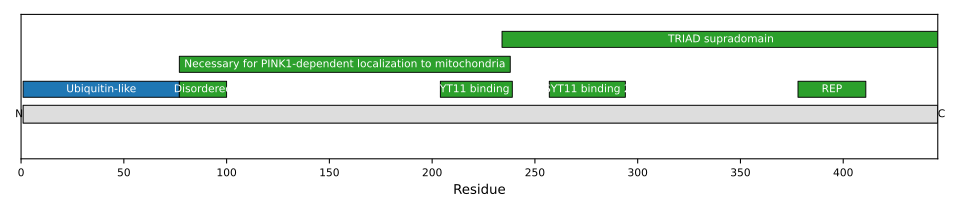
1: Functions within a multiprotein E3 ubiquitin ligase complex, catalyzing the covalent attachment of ubiquitin moieties onto substrate proteins (PubMed:10888878, PubMed:10973942, PubMed:11431533, PubMed:12150907, PubMed:12628165, PubMed:15105460, PubMed:16135753, PubMed:21376232, PubMed:21532592, PubMed:22396657, PubMed:23620051, PubMed:23754282, PubMed:24660806, PubMed:24751536, PubMed:29311685, PubMed:32047033). Substrates include SYT11 and VDAC1 (PubMed:29311685, PubMed:32047033). Other substrates are BCL2, CCNE1, GPR37, RHOT1/MIRO1, MFN1, MFN2, STUB1, SNCAIP, SEPTIN5, TOMM20, USP30, ZNF746, MIRO1 and AIMP2 (PubMed:10888878, PubMed:10973942, PubMed:11431533, PubMed:12150907, PubMed:12628165, PubMed:15105460, PubMed:16135753, PubMed:21376232, PubMed:21532592, PubMed:22396657, PubMed:23620051, PubMed:23754282, PubMed:24660806, PubMed:24751536). Mediates monoubiquitination as well as 'Lys-6', 'Lys-11', 'Lys-48'-linked and 'Lys-63'-linked polyubiquitination of substrates depending on the context (PubMed:19229105, PubMed:20889974, PubMed:25474007, PubMed:25621951, PubMed:32047033). Participates in the removal and/or detoxification of abnormally folded or damaged protein by mediating 'Lys-63'-linked polyubiquitination of misfolded proteins such as PARK7: 'Lys-63'-linked polyubiquitinated misfolded proteins are then recognized by HDAC6, leading to their recruitment to aggresomes, followed by degradation (PubMed:17846173, PubMed:19229105). Mediates 'Lys-63'-linked polyubiquitination of a 22 kDa O-linked glycosylated isoform of SNCAIP, possibly playing a role in Lewy-body formation (PubMed:11431533, PubMed:11590439, PubMed:15105460, PubMed:15728840, PubMed:19229105). Mediates monoubiquitination of BCL2, thereby acting as a positive regulator of autophagy (PubMed:20889974). Protects against mitochondrial dysfunction during cellular stress, by acting downstream of PINK1 to coordinate mitochondrial quality control mechanisms that remove and replace dysfunctional mitochondrial components (PubMed:11439185, PubMed:18957282, PubMed:19029340, PubMed:19966284, PubMed:21376232, PubMed:22082830, PubMed:22396657, PubMed:23620051, PubMed:23933751, PubMed:24660806, PubMed:24784582, PubMed:24896179, PubMed:25474007, PubMed:25527291, PubMed:32047033). Depending on the severity of mitochondrial damage and/or dysfunction, activity ranges from preventing apoptosis and stimulating mitochondrial biogenesis to regulating mitochondrial dynamics and eliminating severely damaged mitochondria via mitophagy (PubMed:11439185, PubMed:19029340, PubMed:19801972, PubMed:19966284, PubMed:21376232, PubMed:22082830, PubMed:22396657, PubMed:23620051, PubMed:23685073, PubMed:23933751, PubMed:24896179, PubMed:25527291, PubMed:32047033, PubMed:33499712). Activation and recruitment onto the outer membrane of damaged/dysfunctional mitochondria (OMM) requires PINK1-mediated phosphorylation of both PRKN and ubiquitin (PubMed:24660806, PubMed:24784582, PubMed:25474007, PubMed:25527291). After mitochondrial damage, functions with PINK1 to mediate the decision between mitophagy or preventing apoptosis by inducing either the poly- or monoubiquitination of VDAC1, respectively; polyubiquitination of VDAC1 promotes mitophagy, while monoubiquitination of VDAC1 decreases mitochondrial calcium influx which ultimately inhibits apoptosis (PubMed:27534820, PubMed:32047033). When cellular stress results in irreversible mitochondrial damage, promotes the autophagic degradation of dysfunctional depolarized mitochondria (mitophagy) by promoting the ubiquitination of mitochondrial proteins such as TOMM20, RHOT1/MIRO1, MFN1 and USP30 (PubMed:19029340, PubMed:19966284, PubMed:21753002, PubMed:22396657, PubMed:23620051, PubMed:23685073, PubMed:23933751, PubMed:24896179, PubMed:25527291). Preferentially assembles 'Lys-6'-, 'Lys-11'- and 'Lys-63'-linked polyubiquitin chains, leading to mitophagy (PubMed:25621951, PubMed:32047033). The PINK1-PRKN pathway also promotes fission of damaged mitochondria by PINK1-mediated phosphorylation which promotes the PRKN-dependent degradation of mitochondrial proteins involved in fission such as MFN2 (PubMed:23620051). This prevents the refusion of unhealthy mitochondria with the mitochondrial network or initiates mitochondrial fragmentation facilitating their later engulfment by autophagosomes (PubMed:23620051). Regulates motility of damaged mitochondria via the ubiquitination and subsequent degradation of MIRO1 and MIRO2; in motor neurons, this likely inhibits mitochondrial intracellular anterograde transport along the axons which probably increases the chance of the mitochondria undergoing mitophagy in the soma (PubMed:22396657). Involved in mitochondrial biogenesis via the 'Lys-48'-linked polyubiquitination of transcriptional repressor ZNF746/PARIS which leads to its subsequent proteasomal degradation and allows activation of the transcription factor PPARGC1A (PubMed:21376232). Limits the production of reactive oxygen species (ROS) (PubMed:18541373). Regulates cyclin-E during neuronal apoptosis (PubMed:12628165). In collaboration with CHPF isoform 2, may enhance cell viability and protect cells from oxidative stress (PubMed:22082830). Independently of its ubiquitin ligase activity, protects from apoptosis by the transcriptional repression of p53/TP53 (PubMed:19801972). May protect neurons against alpha synuclein toxicity, proteasomal dysfunction, GPR37 accumulation, and kainate-induced excitotoxicity (PubMed:11439185). May play a role in controlling neurotransmitter trafficking at the presynaptic terminal and in calcium-dependent exocytosis. May represent a tumor suppressor gene (PubMed:12719539)