Dynamin-like 120 kDa protein, mitochondrial (EC 3.6.5.5) (Optic atrophy protein 1) [Cleaved into: Dynamin-like 120 kDa protein, form S1]
1_MWRLR 6_ RAAVA 11_ CEVCQ 16_ SLVKH 21_ SSGIK 26_ GSLPL 31_ QKLHL 36_ VSRSI 41_ YHSHH 46_ PTLKL 51_ QRPQL 56_ RTSFQ 61_ QFSSL 66_ TNLPL 71_ RKLKF 76_ SPIKY 81_ GYQPR 86_ RNFWP 91_ ARLAT 96_ RLLKL 101_ RYLIL 106_ GSAVG 111_ GGYTA 116_ KKTFD 121_ QWKDM 126_ IPDLS 131_ EYKWI 136_ VPDIV 141_ WEIDE 146_ YIDFE 151_ KIRKA 156_ LPSSE 161_ DLVKL 166_ APDFD 171_ KIVES 176_ LSLLK 181_ DFFTS 186_ GSPEE 191_ TAFRA 196_ TDRGS 201_ ESDKH 206_ FRKVS 211_ DKEKI 216_ DQLQE 221_ ELLHT 226_ QLKYQ 231_ RILER 236_ LEKEN 241_ KELRK 246_ LVLQK 251_ DDKGI 256_ HHRKL 261_ KKSLI 266_ DMYSE 271_ VLDVL 276_ SDYDA 281_ SYNTQ 286_ DHLPR 291_ VVVVG 296_ DQSAG 301_ KTSVL 306_ EMIAQ 311_ ARIFP 316_ RGSGE 321_ MMTRS 326_ PVKVT 331_ LSEGP 336_ HHVAL 341_ FKDSS 346_ REFDL 351_ TKEED 356_ LAALR 361_ HEIEL 366_ RMRKN 371_ VKEGC 376_ TVSPE 381_ TISLN 386_ VKGPG 391_ LQRMV 396_ LVDLP 401_ GVINT 406_ VTSGM 411_ APDTK 416_ ETIFS 421_ ISKAY 426_ MQNPN 431_ AIILC 436_ IQDGS 441_ VDAER 446_ SIVTD 451_ LVSQM 456_ DPHGR 461_ RTIFV 466_ LTKVD 471_ LAEKN 476_ VASPS 481_ RIQQI 486_ IEGKL 491_ FPMKA 496_ LGYFA 501_ VVTGK 506_ GNSSE 511_ SIEAI 516_ REYEE 521_ EFFQN 526_ SKLLK 531_ TSMLK 536_ AHQVT 541_ TRNLS 546_ LAVSD 551_ CFWKM 556_ VRESV 561_ EQQAD 566_ SFKAT 571_ RFNLE 576_ TEWKN 581_ NYPRL 586_ RELDR 591_ NELFE 596_ KAKNE 601_ ILDEV 606_ ISLSQ 611_ VTPKH 616_ WEEIL 621_ QQSLW 626_ ERVST 631_ HVIEN 636_ IYLPA 641_ AQTMN 646_ SGTFN 651_ TTVDI 656_ KLKQW 661_ TDKQL 666_ PNKAV 671_ EVAWE 676_ TLQEE 681_ FSRFM 686_ TEPKG 691_ KEHDD 696_ IFDKL 701_ KEAVK 706_ EESIK 711_ RHKWN 716_ DFAED 721_ SLRVI 726_ QHNAL 731_ EDRSI 736_ SDKQQ 741_ WDAAI 746_ YFMEE 751_ ALQAR 756_ LKDTE 761_ NAIEN 766_ MVGPD 771_ WKKRW 776_ LYWKN 781_ RTQEQ 786_ CVHNE 791_ TKNEL 796_ EKMLK 801_ CNEEH 806_ PAYLA 811_ SDEIT 816_ TVRKN 821_ LESRG 826_ VEVDP 831_ SLIKD 836_ TWHQV 841_ YRRHF 846_ LKTAL 851_ NHCNL 856_ CRRGF 861_ YYYQR 866_ HFVDS 871_ ELECN 876_ DVVLF 881_ WRIQR 886_ MLAIT 891_ ANTLR 896_ QQLTN 901_ TEVRR 906_ LEKNV 911_ KEVLE 916_ DFAED 921_ GEKKI 926_ KLLTG 931_ KRVQL 936_ AEDLK 941_ KVREI 946_ QEKLD 951_AFIEA
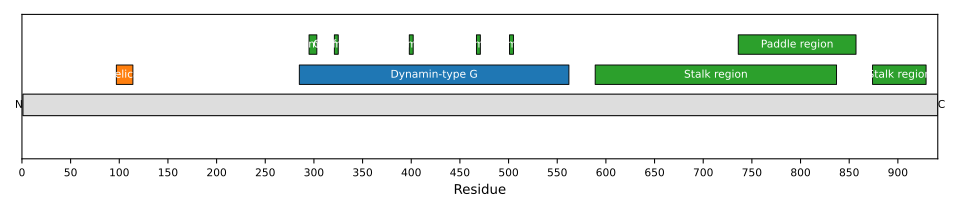
1: Dynamin-related GTPase that is essential for normal mitochondrial morphology by mediating fusion of the mitochondrial inner membranes, regulating cristae morphology and maintaining respiratory chain function (PubMed:16778770, PubMed:17709429, PubMed:20185555, PubMed:24616225, PubMed:28628083, PubMed:28746876, PubMed:31922487, PubMed:32228866, PubMed:32567732, PubMed:33130824, PubMed:33237841, PubMed:37612504, PubMed:37612506). Exists in two forms: the transmembrane, long form (Dynamin-like GTPase OPA1, long form; L-OPA1), which is tethered to the inner mitochondrial membrane, and the short soluble form (Dynamin-like GTPase OPA1, short form; S-OPA1), which results from proteolytic cleavage and localizes in the intermembrane space (PubMed:31922487, PubMed:32228866, PubMed:33237841, PubMed:37612504, PubMed:37612506). Both forms (L-OPA1 and S-OPA1) cooperate to catalyze the fusion of the mitochondrial inner membrane (PubMed:31922487, PubMed:37612504, PubMed:37612506). The equilibrium between L-OPA1 and S-OPA1 is essential: excess levels of S-OPA1, produced by cleavage by OMA1 following loss of mitochondrial membrane potential, lead to an impaired equilibrium between L-OPA1 and S-OPA1, inhibiting mitochondrial fusion (PubMed:20038677, PubMed:31922487). The balance between L-OPA1 and S-OPA1 also influences cristae shape and morphology (By similarity). Involved in remodeling cristae and the release of cytochrome c during apoptosis (By similarity). Proteolytic processing by PARL in response to intrinsic apoptotic signals may lead to disassembly of OPA1 oligomers and release of the caspase activator cytochrome C (CYCS) into the mitochondrial intermembrane space (By similarity). Acts as a regulator of T-helper Th17 cells, which are characterized by cells with fused mitochondria with tight cristae, by mediating mitochondrial membrane remodeling: OPA1 is required for interleukin-17 (IL-17) production (By similarity). Its role in mitochondrial morphology is required for mitochondrial genome maintenance (PubMed:18158317, PubMed:20974897)
2: Constitutes the transmembrane long form (L-OPA1) that plays a central role in mitochondrial inner membrane fusion and cristae morphology (PubMed:31922487, PubMed:32228866, PubMed:37612504, PubMed:37612506). L-OPA1 and the soluble short form (S-OPA1) form higher-order helical assemblies that coordinate the fusion of mitochondrial inner membranes (PubMed:31922487, PubMed:37612504, PubMed:37612506). Inner membrane-anchored L-OPA1 molecules initiate membrane remodeling by recruiting soluble S-OPA1 to rapidly polymerize into a flexible cylindrical scaffold encaging the mitochondrial inner membrane (PubMed:37612504, PubMed:37612506). Once at the membrane surface, the formation of S-OPA1 helices induce bilayer curvature (PubMed:37612504, PubMed:37612506). OPA1 dimerization through the paddle region, which inserts into cardiolipin-containing membrane, promotes GTP hydrolysis and the helical assembly of a flexible OPA1 lattice on the membrane, which drives membrane curvature and mitochondrial fusion (PubMed:28628083, PubMed:37612504, PubMed:37612506). Plays a role in the maintenance and remodeling of mitochondrial cristae, some invaginations of the mitochondrial inner membrane that provide an increase in the surface area (PubMed:32567732, PubMed:33130824). Probably acts by forming helical filaments at the inside of inner membrane tubes with the shape and dimensions of crista junctions (By similarity). The equilibrium between L-OPA1 and S-OPA1 influences cristae shape and morphology: increased L-OPA1 levels promote cristae stacking and elongated mitochondria, while increased S-OPA1 levels correlated with irregular cristae packing and round mitochondria shape (By similarity)
3: Constitutes the soluble short form (S-OPA1) generated by cleavage by OMA1, which plays a central role in mitochondrial inner membrane fusion and cristae morphology (PubMed:31922487, PubMed:32228866, PubMed:32245890, PubMed:37612504, PubMed:37612506). The transmembrane long form (L-OPA1) and the S-OPA1 form higher-order helical assemblies that coordinate the fusion of mitochondrial inner membranes (PubMed:31922487, PubMed:32228866, PubMed:37612504, PubMed:37612506). Inner membrane-anchored L-OPA1 molecules initiate membrane remodeling by recruiting soluble S-OPA1 to rapidly polymerize into a flexible cylindrical scaffold encaging the mitochondrial inner membrane (PubMed:32228866, PubMed:37612504, PubMed:37612506). Once at the membrane surface, the formation of S-OPA1 helices induce bilayer curvature (PubMed:37612504, PubMed:37612506). OPA1 dimerization through the paddle region, which inserts into cardiolipin-containing membrane, promotes GTP hydrolysis and the helical assembly of a flexible OPA1 lattice on the membrane, which drives membrane curvature and mitochondrial fusion (PubMed:28628083, PubMed:37612504, PubMed:37612506). Excess levels of S-OPA1 produced by cleavage by OMA1 following stress conditions that induce loss of mitochondrial membrane potential, lead to an impaired equilibrium between L-OPA1 and S-OPA1, thereby inhibiting mitochondrial fusion (PubMed:20038677). Involved in mitochondrial safeguard in response to transient mitochondrial membrane depolarization by mediating flickering: cleavage by OMA1 leads to excess production of S-OPA1, preventing mitochondrial hyperfusion (By similarity). Plays a role in the maintenance and remodeling of mitochondrial cristae, some invaginations of the mitochondrial inner membrane that provide an increase in the surface area (PubMed:32245890). Probably acts by forming helical filaments at the inside of inner membrane tubes with the shape and dimensions of crista junctions (By similarity). The equilibrium between L-OPA1 and S-OPA1 influences cristae shape and morphology: increased L-OPA1 levels promote cristae stacking and elongated mitochondria, while increased S-OPA1 levels correlated with irregular cristae packing and round mitochondria shape (By similarity)
4: Coexpression of isoform 1 with shorter alternative products is required for optimal activity in promoting mitochondrial fusion
5: Isoforms that contain the alternative exon 4b are required for mitochondrial genome maintenance, possibly by anchoring the mitochondrial nucleoids to the inner mitochondrial membrane
6: Isoforms that contain the alternative exon 4b are required for mitochondrial genome maintenance, possibly by anchoring the mitochondrial nucleoids to the inner mitochondrial membrane