Frizzled-6 (Fz-6) (hFz6)
1_MEMFT 6_ FLLTC 11_ IFLPL 16_ LRGHS 21_ LFTCE 26_ PITVP 31_ RCMKM 36_ AYNMT 41_ FFPNL 46_ MGHYD 51_ QSIAA 56_ VEMEH 61_ FLPLA 66_ NLECS 71_ PNIET 76_ FLCKA 81_ FVPTC 86_ IEQIH 91_ VVPPC 96_ RKLCE 101_ KVYSD 106_ CKKLI 111_ DTFGI 116_ RWPEE 121_ LECDR 126_ LQYCD 131_ ETVPV 136_ TFDPH 141_ TEFLG 146_ PQKKT 151_ EQVQR 156_ DIGFW 161_ CPRHL 166_ KTSGG 171_ QGYKF 176_ LGIDQ 181_ CAPPC 186_ PNMYF 191_ KSDEL 196_ EFAKS 201_ FIGTV 206_ SIFCL 211_ CATLF 216_ TFLTF 221_ LIDVR 226_ RFRYP 231_ ERPII 236_ YYSVC 241_ YSIVS 246_ LMYFI 251_ GFLLG 256_ DSTAC 261_ NKADE 266_ KLELG 271_ DTVVL 276_ GSQNK 281_ ACTVL 286_ FMLLY 291_ FFTMA 296_ GTVWW 301_ VILTI 306_ TWFLA 311_ AGRKW 316_ SCEAI 321_ EQKAV 326_ WFHAV 331_ AWGTP 336_ GFLTV 341_ MLLAM 346_ NKVEG 351_ DNISG 356_ VCFVG 361_ LYDLD 366_ ASRYF 371_ VLLPL 376_ CLCVF 381_ VGLSL 386_ LLAGI 391_ ISLNH 396_ VRQVI 401_ QHDGR 406_ NQEKL 411_ KKFMI 416_ RIGVF 421_ SGLYL 426_ VPLVT 431_ LLGCY 436_ VYEQV 441_ NRITW 446_ EITWV 451_ SDHCR 456_ QYHIP 461_ CPYQA 466_ KAKAR 471_ PELAL 476_ FMIKY 481_ LMTLI 486_ VGISA 491_ VFWVG 496_ SKKTC 501_ TEWAG 506_ FFKRN 511_ RKRDP 516_ ISESR 521_ RVLQE 526_ SCEFF 531_ LKHNS 536_ KVKHK 541_ KKHYK 546_ PSSHK 551_ LKVIS 556_ KSMGT 561_ STGAT 566_ ANHGT 571_ SAVAI 576_ TSHDY 581_ LGQET 586_ LTEIQ 591_ TSPET 596_ SMREV 601_ KADGA 606_ STPRL 611_ REQDC 616_ GEPAS 621_ PAASI 626_ SRLSG 631_ EQVDG 636_ KGQAG 641_ SVSES 646_ ARSEG 651_ RISPK 656_ SDITD 661_ TGLAQ 666_ SNNLQ 671_ VPSSS 676_ EPSSL 681_ KGSTS 686_ LLVHP 691_ VSGVR 696_ KEQGG 701_GCHSD
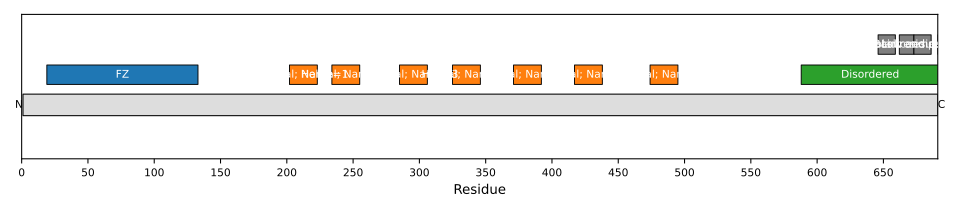
1: Receptor for Wnt proteins. Most of frizzled receptors are coupled to the beta-catenin canonical signaling pathway, which leads to the activation of disheveled proteins, inhibition of GSK-3 kinase, nuclear accumulation of beta-catenin and activation of Wnt target genes. A second signaling pathway involving PKC and calcium fluxes has been seen for some family members, but it is not yet clear if it represents a distinct pathway or if it can be integrated in the canonical pathway, as PKC seems to be required for Wnt-mediated inactivation of GSK-3 kinase. Both pathways seem to involve interactions with G-proteins. May be involved in transduction and intercellular transmission of polarity information during tissue morphogenesis and/or in differentiated tissues. Together with FZD3, is involved in the neural tube closure and plays a role in the regulation of the establishment of planar cell polarity (PCP), particularly in the orientation of asymmetric bundles of stereocilia on the apical faces of a subset of auditory and vestibular sensory cells located in the inner ear (By similarity)