Nucleolar protein 3 (Apoptosis repressor with CARD) (Muscle-enriched cytoplasmic protein) (Myp) (Nucleolar protein of 30 kDa) (Nop30)
1_MGNAQ 6_ ERPSE 11_ TIDRE 16_ RKRLV 21_ ETLQA 26_ DSGLL 31_ LDALL 36_ ARGVL 41_ TGPEY 46_ EALDA 51_ LPDAE 56_ RRVRR 61_ LLLLV 66_ QGKGE 71_ AACQE 76_ LLRCA 81_ QRTAG 86_ APDPA 91_ WDWQH 96_ VGPGY 101_ RDRSY 106_ DPPCP 111_ GHWTP 116_ EAPGS 121_ GTTCP 126_ GLPRA 131_ SDPDE 136_ AGGPE 141_ GSEAV 146_ QSGTP 151_ EEPEP 156_ ELEAE 161_ ASKEA 166_ EPEPE 171_ PEPEL 176_ EPEAE 181_ AEPEP 186_ ELEPE 191_ PDPEP 196_ EPDFE 201_ERDES
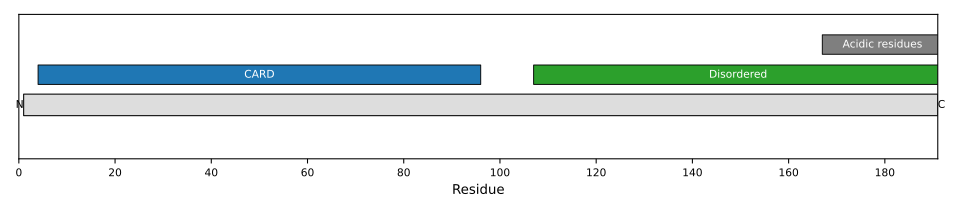
1: May be involved in RNA splicing
2: Functions as an apoptosis repressor that blocks multiple modes of cell death. Inhibits extrinsic apoptotic pathways through two different ways. Firstly by interacting with FAS and FADD upon FAS activation blocking death-inducing signaling complex (DISC) assembly (By similarity). Secondly by interacting with CASP8 in a mitochondria localization- and phosphorylation-dependent manner, limiting the amount of soluble CASP8 available for DISC-mediated activation (By similarity). Inhibits intrinsic apoptotic pathway in response to a wide range of stresses, through its interaction with BAX resulting in BAX inactivation, preventing mitochondrial dysfunction and release of pro-apoptotic factors (PubMed:15004034). Inhibits calcium-mediated cell death by functioning as a cytosolic calcium buffer, dissociating its interaction with CASP8 and maintaining calcium homeostasis (PubMed:15509781). Negatively regulates oxidative stress-induced apoptosis by phosphorylation-dependent suppression of the mitochondria-mediated intrinsic pathway, by blocking CASP2 activation and BAX translocation (By similarity). Negatively regulates hypoxia-induced apoptosis in part by inhibiting the release of cytochrome c from mitochondria in a caspase-independent manner (By similarity). Also inhibits TNF-induced necrosis by preventing TNF-signaling pathway through TNFRSF1A interaction abrogating the recruitment of RIPK1 to complex I (By similarity). Finally through its role as apoptosis repressor, promotes vascular remodeling through inhibition of apoptosis and stimulation of proliferation, in response to hypoxia (By similarity). Inhibits too myoblast differentiation through caspase inhibition (By similarity)