Core histone macro-H2A.1 (Histone macroH2A1) (mH2A1) (Histone H2A.y) (H2A/y) (Medulloblastoma antigen MU-MB-50.205)
1_MSSRG 6_ GKKKS 11_ TKTSR 16_ SAKAG 21_ VIFPV 26_ GRMLR 31_ YIKKG 36_ HPKYR 41_ IGVGA 46_ PVYMA 51_ AVLEY 56_ LTAEI 61_ LELAG 66_ NAARD 71_ NKKGR 76_ VTPRH 81_ ILLAV 86_ ANDEE 91_ LNQLL 96_ KGVTI 101_ ASGGV 106_ LPNIH 111_ PELLA 116_ KKRGS 121_ KGKLE 126_ AIITP 131_ PPAKK 136_ AKSPS 141_ QKKPV 146_ SKKAG 151_ GKKGA 156_ RKSKK 161_ KQGEV 166_ SKAAS 171_ ADSTT 176_ EGTPA 181_ DGFTV 186_ LSTKS 191_ LFLGQ 196_ KLNLI 201_ HSEIS 206_ NLAGF 211_ EVEAI 216_ INPTN 221_ ADIDL 226_ KDDLG 231_ NTLEK 236_ KGGKE 241_ FVEAV 246_ LELRK 251_ KNGPL 256_ EVAGA 261_ AVSAG 266_ HGLPA 271_ KFVIH 276_ CNSPV 281_ WGADK 286_ CEELL 291_ EKTVK 296_ NCLAL 301_ ADDKK 306_ LKSIA 311_ FPSIG 316_ SGRNG 321_ FPKQT 326_ AAQLI 331_ LKAIS 336_ SYFVS 341_ TMSSS 346_ IKTVY 351_ FVLFD 356_ SESIG 361_ IYVQE 366_MAKLD
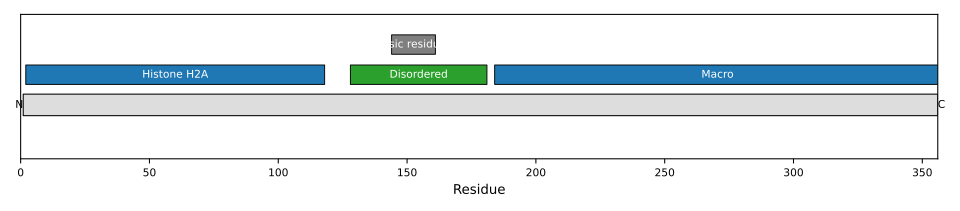
1: Variant histone H2A which replaces conventional H2A in a subset of nucleosomes where it represses transcription (PubMed:12718888, PubMed:15621527, PubMed:16428466). Nucleosomes wrap and compact DNA into chromatin, limiting DNA accessibility to the cellular machineries which require DNA as a template (PubMed:15897469). Histones thereby play a central role in transcription regulation, DNA repair, DNA replication and chromosomal stability (PubMed:15897469). DNA accessibility is regulated via a complex set of post-translational modifications of histones, also called histone code, and nucleosome remodeling. Involved in stable X chromosome inactivation (PubMed:15897469). Inhibits the binding of transcription factors, including NF-kappa-B, and interferes with the activity of remodeling SWI/SNF complexes (PubMed:12718888, PubMed:16428466). Inhibits histone acetylation by EP300 and recruits class I HDACs, which induces a hypoacetylated state of chromatin (PubMed:16107708, PubMed:16428466)
2: Isoform that specifically binds poly-ADP-ribose and O-acetyl-ADP-ribose and plays a key role in NAD(+) metabolism (PubMed:15902274). Able to bind to the ends of poly-ADP-ribose chains created by PARP1 and cap them (By similarity). This prevents PARP1 from further addition of ADP-ribose and thus limits the consumption of nuclear NAD(+), allowing the cell to maintain proper NAD(+) levels in both the nucleus and the mitochondria to promote proper mitochondrial respiration (By similarity). Increases the expression of genes involved in redox metabolism, including SOD3 (PubMed:23022728)
3: In contrast to isoform 1, does not bind poly-ADP-ribose (PubMed:15902274). Represses SOD3 gene expression (PubMed:23022728)