Peptidoglycan recognition protein 1 (Peptidoglycan recognition protein short) (PGRP-S)
1_MSRRS 6_ MLLAW 11_ ALPSL 16_ LRLGA 21_ AQETE 26_ DPACC 31_ SPIVP 36_ RNEWK 41_ ALASE 46_ CAQHL 51_ SLPLR 56_ YVVVS 61_ HTAGS 66_ SCNTP 71_ ASCQQ 76_ QARNV 81_ QHYHM 86_ KTLGW 91_ CDVGY 96_ NFLIG 101_ EDGLV 106_ YEGRG 111_ WNFTG 116_ AHSGH 121_ LWNPM 126_ SIGIS 131_ FMGNY 136_ MDRVP 141_ TPQAI 146_ RAAQG 151_ LLACG 156_ VAQGA 161_ LRSNY 166_ VLKGH 171_ RDVQR 176_ TLSPG 181_ NQLYH 186_ LIQNW 191_PHYRS
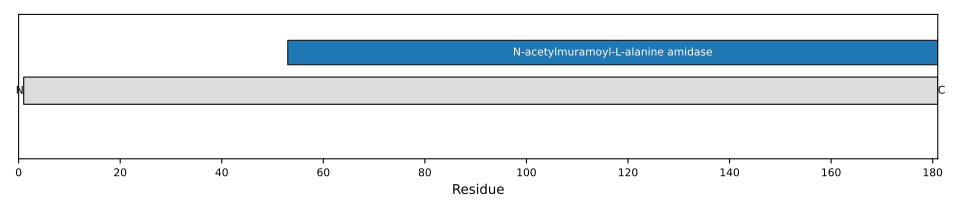
1: Innate immunity protein that plays several important functions in antimicrobial and antitumor defense systems. Acts as a pattern receptor that binds to murein peptidoglycans (PGN) of Gram-positive bacteria and thus provides bactericidal activity (PubMed:9707603). Forms an equimolar complex with heat shock protein HSPA1A and induces programmed cell death through apoptosis and necroptosis in tumor cell lines by activating the TNFR1 receptor on the target cell membrane (PubMed:21247889, PubMed:26183779). In addition, acts in complex with the Ca(2+)-binding protein S100A4 as a chemoattractant able to induce lymphocyte movement (PubMed:26654597). Mechanistically, this complex acts as a ligand of the chemotactic receptors CCR5 and CXCR3 which are present on the cells of the immune system (PubMed:30713770). Also promotes the activation of lymphocytes that become able to kill virus-infected cells as well as tumor cells by modulating the spectrum of their target-cell specificity (PubMed:28977785, PubMed:29083508). Induction of cytotoxicity on monocyte surface requires interaction with TREM1 receptor (PubMed:25595774, PubMed:28977785)