High affinity cGMP-specific 3',5'-cyclic phosphodiesterase 9A (EC 3.1.4.35)
1_MGSGS 6_ SSYRP 11_ KAIYL 16_ DIDGR 21_ IQKVI 26_ FSKYC 31_ NSSDI 36_ MDLFC 41_ IATGL 46_ PRNTT 51_ ISLLT 56_ TDDAM 61_ VSIDP 66_ TMPAN 71_ SERTP 76_ YKVRP 81_ VAIKQ 86_ LSAGV 91_ EDKRT 96_ TSRGQ 101_ SAERP 106_ LRDRR 111_ VVGLE 116_ QPRRE 121_ GAFES 126_ GQVEP 131_ RPREP 136_ QGCYQ 141_ EGQRI 146_ PPERE 151_ ELIQS 156_ VLAQV 161_ AEQFS 166_ RAFKI 171_ NELKA 176_ EVANH 181_ LAVLE 186_ KRVEL 191_ EGLKV 196_ VEIEK 201_ CKSDI 206_ KKMRE 211_ ELAAR 216_ SSRTN 221_ CPCKY 226_ SFLDN 231_ HKKLT 236_ PRRDV 241_ PTYPK 246_ YLLSP 251_ ETIEA 256_ LRKPT 261_ FDVWL 266_ WEPNE 271_ MLSCL 276_ EHMYH 281_ DLGLV 286_ RDFSI 291_ NPVTL 296_ RRWLF 301_ CVHDN 306_ YRNNP 311_ FHNFR 316_ HCFCV 321_ AQMMY 326_ SMVWL 331_ CSLQE 336_ KFSQT 341_ DILIL 346_ MTAAI 351_ CHDLD 356_ HPGYN 361_ NTYQI 366_ NARTE 371_ LAVRY 376_ NDISP 381_ LENHH 386_ CAVAF 391_ QILAE 396_ PECNI 401_ FSNIP 406_ PDGFK 411_ QIRQG 416_ MITLI 421_ LATDM 426_ ARHAE 431_ IMDSF 436_ KEKME 441_ NFDYS 446_ NEEHM 451_ TLLKM 456_ ILIKC 461_ CDISN 466_ EVRPM 471_ EVAEP 476_ WVDCL 481_ LEEYF 486_ MQSDR 491_ EKSEG 496_ LPVAP 501_ FMDRD 506_ KVTKA 511_ TAQIG 516_ FIKFV 521_ LIPMF 526_ ETVTK 531_ LFPMV 536_ EEIML 541_ QPLWE 546_ SRDRY 551_ EELKR 556_ IDDAM 561_ KELQK 566_ KTDSL 571_ TSGAT 576_ EKSRE 581_ RSRDV 586_KNSEG
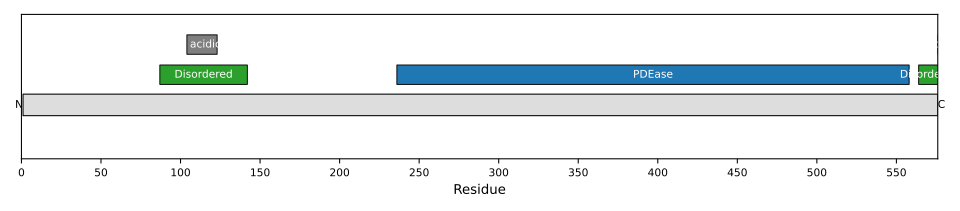
1: Specifically hydrolyzes the second messenger cGMP, which is a key regulator of many important physiological processes. Highly specific: compared to other members of the cyclic nucleotide phosphodiesterase family, has the highest affinity and selectivity for cGMP (PubMed:18757755, PubMed:21483814, PubMed:9624146). Specifically regulates natriuretic-peptide-dependent cGMP signaling in heart, acting as a regulator of cardiac hypertrophy in myocytes and muscle. Does not regulate nitric oxide-dependent cGMP in heart (PubMed:25799991). Additional experiments are required to confirm whether its ability to hydrolyze natriuretic-peptide-dependent cGMP is specific to heart or is a general feature of the protein (Probable). In brain, involved in cognitive function, such as learning and long-term memory (By similarity)