E3 UFM1-protein ligase 1 (EC 2.3.2.-) (E3 UFM1-protein transferase 1) (Multiple alpha-helix protein located at ER) (Novel LZAP-binding protein) (Regulator of C53/LZAP and DDRGK1)
1_MADAW 6_ EEIRR 11_ LAADF 16_ QRAQF 21_ AEATQ 26_ RLSER 31_ NCIEI 36_ VNKLI 41_ AQKQL 46_ EVVHT 51_ LDGKE 56_ YITPA 61_ QISKE 66_ MRDEL 71_ HVRGG 76_ RVNIV 81_ DLQQV 86_ INVDL 91_ IHIEN 96_ RIGDI 101_ IKSEK 106_ HVQLV 111_ LGQLI 116_ DENYL 121_ DRLAE 126_ EVNDK 131_ LQESG 136_ QVTIS 141_ ELCKT 146_ YDLPG 151_ NFLTQ 156_ ALTQR 161_ LGRII 166_ SGHID 171_ LDNRG 176_ VIFTE 181_ AFVAR 186_ HKARI 191_ RGLFS 196_ AITRP 201_ TAVNS 206_ LISKY 211_ GFQEQ 216_ LLYSV 221_ LEELV 226_ NSGRL 231_ RGTVV 236_ GGRQD 241_ KAVFV 246_ PDIYS 251_ RTQST 256_ WVDSF 261_ FRQNG 266_ YLEFD 271_ ALSRL 276_ GIPDA 281_ VSYIK 286_ KRYKT 291_ TQLLF 296_ LKAAC 301_ VGQGL 306_ VDQVE 311_ ASVEE 316_ AISSG 321_ TWVDI 326_ APLLP 331_ TSLSV 336_ EDAAI 341_ LLQQV 346_ MRAFS 351_ KQAST 356_ VVFSD 361_ TVVVS 366_ EKFIN 371_ DCTEL 376_ FRELM 381_ HQKAE 386_ KEMKN 391_ NPVHL 396_ ITEED 401_ LKQIS 406_ TLESV 411_ STSKK 416_ DKKDE 421_ RRRKA 426_ TEGSG 431_ SMRGG 436_ GGGNA 441_ REYKI 446_ KKVKK 451_ KGRKD 456_ DDSDD 461_ ESQSS 466_ HTGKK 471_ KPEIS 476_ FMFQD 481_ EIEDF 486_ LRKHI 491_ QDAPE 496_ EFISE 501_ LAEYL 506_ IKPLN 511_ KTYLE 516_ VVRSV 521_ FMSST 526_ TSASG 531_ TGRKR 536_ TIKDL 541_ QEEVS 546_ NLYNN 551_ IRLFE 556_ KGMKF 561_ FADDT 566_ QAALT 571_ KHLLK 576_ SVCTD 581_ ITNLI 586_ FNFLA 591_ SDLMM 596_ AVDDP 601_ AAITS 606_ EIRKK 611_ ILSKL 616_ SEETK 621_ VALTK 626_ LHNSL 631_ NEKSI 636_ EDFIS 641_ CLDSA 646_ AEACD 651_ IMVKR 656_ GDKKR 661_ ERQIL 666_ FQHRQ 671_ ALAEQ 676_ LKVTE 681_ DPALI 686_ LHLTS 691_ VLLFQ 696_ FSTHS 701_ MLHAP 706_ GRCVP 711_ QIIAF 716_ LNSKI 721_ PEDQH 726_ ALLVK 731_ YQGLV 736_ VKQLV 741_ SQSKK 746_ TGQGD 751_ YPLNN 756_ ELDKE 761_ QEDVA 766_ STTRK 771_ ELQEL 776_ SSSIK 781_ DLVLK 786_SRKSS
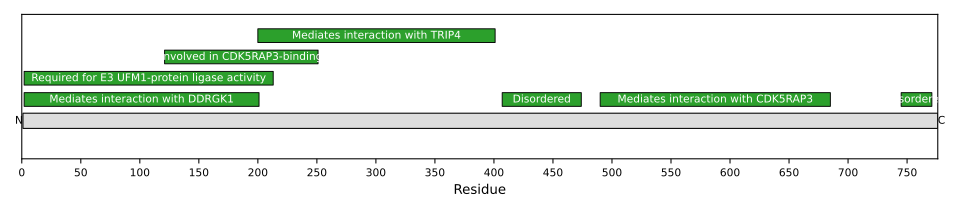
1: E3 protein ligase that mediates ufmylation, the covalent attachment of the ubiquitin-like modifier UFM1 to lysine residues on target proteins, and which plays a key role in various processes, such as ribosome recycling, response to DNA damage, interferon response or reticulophagy (also called ER-phagy) (PubMed:20018847, PubMed:20164180, PubMed:20228063, PubMed:25219498, PubMed:27351204, PubMed:30626644, PubMed:30783677, PubMed:32160526, PubMed:32807901, PubMed:35394863, PubMed:36121123, PubMed:36543799, PubMed:36893266, PubMed:37036982, PubMed:37311461, PubMed:37595036, PubMed:37795761, PubMed:38377992, PubMed:38383785, PubMed:38383789). Catalyzes ufmylation of many protein, such as CD274/PD-L1, CDK5RAP3, CYB5R3, DDRGK1, EIF6, histone H4, MRE11, P4HB, PDCD1/PD-1, TRIP4, RPN1, RPS20/uS10, RPL10/uL16, RPL26/uL24, SYVN1/HRD1 and TP53/p53 (PubMed:20018847, PubMed:20531390, PubMed:25219498, PubMed:30783677, PubMed:30886146, PubMed:32160526, PubMed:35753586, PubMed:36543799, PubMed:36893266, PubMed:37036982, PubMed:37595036, PubMed:37795761, PubMed:38383785, PubMed:38383789). As part of the UREL complex, plays a key role in ribosome recycling by catalyzing mono-ufmylation of RPL26/uL24 subunit of the 60S ribosome (PubMed:38383785, PubMed:38383789). Ufmylation of RPL26/uL24 occurs on free 60S ribosomes following ribosome dissociation: it weakens the junction between post-termination 60S subunits and SEC61 translocons, promoting release and recycling of the large ribosomal subunit from the endoplasmic reticulum membrane (PubMed:38383785, PubMed:38383789). Ufmylation of RPL26/uL24 and subsequent 60S ribosome recycling either take place after normal termination of translation or after ribosome stalling during cotranslational translocation at the endoplasmic reticulum (PubMed:37036982, PubMed:37595036, PubMed:38383785, PubMed:38383789). Involved in reticulophagy in response to endoplasmic reticulum stress by mediating ufmylation of proteins such as CYB5R3 and RPN1, thereby promoting lysosomal degradation of ufmylated proteins (PubMed:23152784, PubMed:32160526, PubMed:36543799). Ufmylation in response to endoplasmic reticulum stress is essential for processes such as hematopoiesis, blood vessel morphogenesis or inflammatory response (PubMed:32050156). Mediates ufmylation of DDRGK1 and CDK5RAP3; the role of these modifications is however unclear: as both DDRGK1 and CDK5RAP3 act as substrate adapters for ufmylation, it is uncertain whether ufmylation of these proteins is, a collateral effect or is required for ufmylation (PubMed:20018847, PubMed:20531390). Acts as a negative regulator of T-cell activation by mediating ufmylation and stabilization of PDCD1/PD-1 (PubMed:38377992). Also involved in the response to DNA damage: recruited to double-strand break sites following DNA damage and mediates monoufmylation of histone H4 and ufmylation of MRE11 (PubMed:30783677, PubMed:30886146). Mediates ufmylation of TP53/p53, promoting its stability (PubMed:32807901). Catalyzes ufmylation of TRIP4, thereby playing a role in nuclear receptor-mediated transcription (PubMed:25219498). Required for hematopoietic stem cell function and hematopoiesis (By similarity)