AP-2 complex subunit alpha-2 (100 kDa coated vesicle protein C) (Adaptor protein complex AP-2 subunit alpha-2) (Adaptor-related protein complex 2 subunit alpha-2) (Alpha-adaptin C) (Alpha2-adaptin) (Clathrin assembly protein complex 2 alpha-C large chain) (Huntingtin yeast partner J) (Huntingtin-interacting protein 9) (HIP-9) (Huntingtin-interacting protein J) (Plasma membrane adaptor HA2/AP2 adaptin alpha C subunit)
1_MPAVS 6_ KGDGM 11_ RGLAV 16_ FISDI 21_ RNCKS 26_ KEAEI 31_ KRINK 36_ ELANI 41_ RSKFK 46_ GDKAL 51_ DGYSK 56_ KKYVC 61_ KLLFI 66_ FLLGH 71_ DIDFG 76_ HMEAV 81_ NLLSS 86_ NRYTE 91_ KQIGY 96_ LFISV 101_ LVNSN 106_ SELIR 111_ LINNA 116_ IKNDL 121_ ASRNP 126_ TFMGL 131_ ALHCI 136_ ASVGS 141_ REMAE 146_ AFAGE 151_ IPKVL 156_ VAGDT 161_ MDSVK 166_ QSAAL 171_ CLLRL 176_ YRTSP 181_ DLVPM 186_ GDWTS 191_ RVVHL 196_ LNDQH 201_ LGVVT 206_ AATSL 211_ ITTLA 216_ QKNPE 221_ EFKTS 226_ VSLAV 231_ SRLSR 236_ IVTSA 241_ STDLQ 246_ DYTYY 251_ FVPAP 256_ WLSVK 261_ LLRLL 266_ QCYPP 271_ PDPAV 276_ RGRLT 281_ ECLET 286_ ILNKA 291_ QEPPK 296_ SKKVQ 301_ HSNAK 306_ NAVLF 311_ EAISL 316_ IIHHD 321_ SEPNL 326_ LVRAC 331_ NQLGQ 336_ FLQHR 341_ ETNLR 346_ YLALE 351_ SMCTL 356_ ASSEF 361_ SHEAV 366_ KTHIE 371_ TVINA 376_ LKTER 381_ DVSVR 386_ QRAVD 391_ LLYAM 396_ CDRSN 401_ APQIV 406_ AEMLS 411_ YLETA 416_ DYSIR 421_ EEIVL 426_ KVAIL 431_ AEKYA 436_ VDYTW 441_ YVDTI 446_ LNLIR 451_ IAGDY 456_ VSEEV 461_ WYRVI 466_ QIVIN 471_ RDDVQ 476_ GYAAK 481_ TVFEA 486_ LQAPA 491_ CHENL 496_ VKVGG 501_ YILGE 506_ FGNLI 511_ AGDPR 516_ SSPLI 521_ QFHLL 526_ HSKFH 531_ LCSVP 536_ TRALL 541_ LSTYI 546_ KFVNL 551_ FPEVK 556_ PTIQD 561_ VLRSD 566_ SQLRN 571_ ADVEL 576_ QQRAV 581_ EYLRL 586_ STVAS 591_ TDILA 596_ TVLEE 601_ MPPFP 606_ ERESS 611_ ILAKL 616_ KKKKG 621_ PSTVT 626_ DLEDT 631_ KRDRS 636_ VDVNG 641_ GPEPA 646_ PASTS 651_ AVSTP 656_ SPSAD 661_ LLGLG 666_ AAPPA 671_ PAGPP 676_ PSSGG 681_ SGLLV 686_ DVFSD 691_ SASVV 696_ APLAP 701_ GSEDN 706_ FARFV 711_ CKNNG 716_ VLFEN 721_ QLLQI 726_ GLKSE 731_ FRQNL 736_ GRMFI 741_ FYGNK 746_ TSTQF 751_ LNFTP 756_ TLICS 761_ DDLQP 766_ NLNLQ 771_ TKPVD 776_ PTVEG 781_ GAQVQ 786_ QVVNI 791_ ECVSD 796_ FTEAP 801_ VLNIQ 806_ FRYGG 811_ TFQNV 816_ SVQLP 821_ ITLNK 826_ FFQPT 831_ EMASQ 836_ DFFQR 841_ WKQLS 846_ NPQQE 851_ VQNIF 856_ KAKHP 861_ MDTEV 866_ TKAKI 871_ IGFGS 876_ ALLEE 881_ VDPNP 886_ ANFVG 891_ AGIIH 896_ TKTTQ 901_ IGCLL 906_ RLEPN 911_ LQAQM 916_ YRLTL 921_ RTSKE 926_ AVSQR 931_LCELL
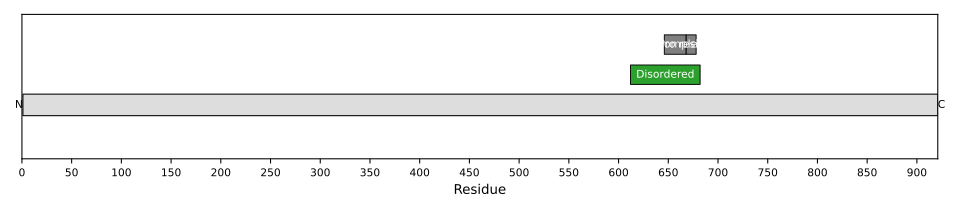
1: Component of the adaptor protein complex 2 (AP-2). Adaptor protein complexes function in protein transport via transport vesicles in different membrane traffic pathways. Adaptor protein complexes are vesicle coat components and appear to be involved in cargo selection and vesicle formation. AP-2 is involved in clathrin-dependent endocytosis in which cargo proteins are incorporated into vesicles surrounded by clathrin (clathrin-coated vesicles, CCVs) which are destined for fusion with the early endosome. The clathrin lattice serves as a mechanical scaffold but is itself unable to bind directly to membrane components. Clathrin-associated adaptor protein (AP) complexes which can bind directly to both the clathrin lattice and to the lipid and protein components of membranes are considered to be the major clathrin adaptors contributing the CCV formation. AP-2 also serves as a cargo receptor to selectively sort the membrane proteins involved in receptor-mediated endocytosis. AP-2 seems to play a role in the recycling of synaptic vesicle membranes from the presynaptic surface. AP-2 recognizes Y-X-X-[FILMV] (Y-X-X-Phi) and [ED]-X-X-X-L-[LI] endocytosis signal motifs within the cytosolic tails of transmembrane cargo molecules. AP-2 may also play a role in maintaining normal post-endocytic trafficking through the ARF6-regulated, non-clathrin pathway. During long-term potentiation in hippocampal neurons, AP-2 is responsible for the endocytosis of ADAM10 (PubMed:23676497). The AP-2 alpha subunit binds polyphosphoinositide-containing lipids, positioning AP-2 on the membrane. The AP-2 alpha subunit acts via its C-terminal appendage domain as a scaffolding platform for endocytic accessory proteins. The AP-2 alpha and AP-2 sigma subunits are thought to contribute to the recognition of the [ED]-X-X-X-L-[LI] motif (By similarity)