Homeobox protein SIX3 (Sine oculis homeobox homolog 3)
1_MVFRS 6_ PLDLY 11_ SSHFL 16_ LPNFA 21_ DSHHR 26_ SILLA 31_ SSGGG 36_ NGAGG 41_ GGGAG 46_ GGSGG 51_ GNGAG 56_ GGGAG 61_ GAGGG 66_ GGGGS 71_ RAPPE 76_ ELSMF 81_ QLPTL 86_ NFSPE 91_ QVASV 96_ CETLE 101_ ETGDI 106_ ERLGR 111_ FLWSL 116_ PVAPG 121_ ACEAI 126_ NKHES 131_ ILRAR 136_ AVVAF 141_ HTGNF 146_ RDLYH 151_ ILENH 156_ KFTKE 161_ SHGKL 166_ QAMWL 171_ EAHYQ 176_ EAEKL 181_ RGRPL 186_ GPVDK 191_ YRVRK 196_ KFPLP 201_ RTIWD 206_ GEQKT 211_ HCFKE 216_ RTRSL 221_ LREWY 226_ LQDPY 231_ PNPSK 236_ KRELA 241_ QATGL 246_ TPTQV 251_ GNWFK 256_ NRRQR 261_ DRAAA 266_ AKNRL 271_ QHQAI 276_ GPSGM 281_ RSLAE 286_ PGCPT 291_ HGSAE 296_ SPSTA 301_ ASPTT 306_ SVSSL 311_ TERAD 316_ TGTSI 321_ LSVTS 326_SDSEC
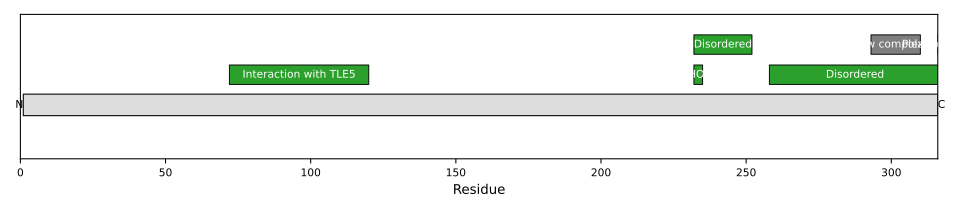
1: Transcriptional regulator which can act as both a transcriptional repressor and activator by binding a ATTA homeodomain core recognition sequence on these target genes. During forebrain development represses WNT1 expression allowing zona limitans intrathalamica formation and thereby ensuring proper anterio-posterior patterning of the diencephalon and formation of the rostral diencephalon. Acts as a direct upstream activator of SHH expression in the rostral diencephalon ventral midline and that in turn SHH maintains its expression. In addition, Six3 activity is required for the formation of the telencephalon. During postnatal stages of brain development is necessary for ependymal cell maturation by promoting the maturation of radial glia into ependymal cells through regulation of neuroblast proliferation and migration. Acts on the proliferation and differentiation of neural progenitor cells through activating transcription of CCND1 and CCND2. During early lens formation plays a role in lens induction and specification by activating directly PAX6 in the presumptive lens ectoderm. In turn PAX6 activates SIX3 resulting in activation of PDGFRA and CCND1 promoting cell proliferation. Also is required for the neuroretina development by directly suppressing WNT8B expression in the anterior neural plate territory. Its action during retina development and lens morphogenesis is TLE5 and TLE4-dependent manner. Furthermore, during eye development regulates several genes expression. Before and during early lens development represses the CRYGF promoter by binding a SIX repressor element. Directly activates RHO transcription, or cooperates with CRX or NRL. Six3 also functions in the formation of the proximodistal axis of the optic cup, and promotes the formation of optic vesicles-like structures. During pituitary development, acts in parallel or alternatively with HESX1 to control cell proliferation through Wnt/beta-catenin pathway (By similarity). Plays a role in eye development by suppressing WNT1 expression and in dorsal-ventral patterning by repressing BMP signaling pathway