CD160 antigen (Natural killer cell receptor BY55) (CD antigen CD160) [Cleaved into: CD160 antigen, soluble form]
1_MLLEP 6_ GRGCC 11_ ALAIL 16_ LAIVD 21_ IQSGG 26_ CINIT 31_ SSASQ 36_ EGTRL 41_ NLICT 46_ VWHKK 51_ EEAEG 56_ FVVFL 61_ CKDRS 66_ GDCSP 71_ ETSLK 76_ QLRLK 81_ RDPGI 86_ DGVGE 91_ ISSQL 96_ MFTIS 101_ QVTPL 106_ HSGTY 111_ QCCAR 116_ SQKSG 121_ IRLQG 126_ HFFSI 131_ LFTET 136_ GNYTV 141_ TGLKQ 146_ RQHLE 151_ FSHNE 156_ GTLSS 161_ GFLQE 166_ KVWVM 171_ LVTSL 176_VALQA
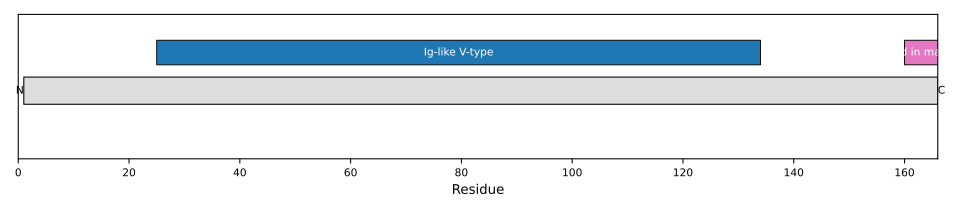
1: Receptor on immune cells capable to deliver stimulatory or inhibitory signals that regulate cell activation and differentiation. Exists as a GPI-anchored and as a transmembrane form, each likely initiating distinct signaling pathways via phosphoinositol 3-kinase in activated NK cells and via LCK and CD247/CD3 zeta chain in activated T cells (PubMed:11978774, PubMed:17307798, PubMed:19109136). Receptor for both classical and non-classical MHC class I molecules (PubMed:12486241, PubMed:9973372). In the context of acute viral infection, recognizes HLA-C and triggers NK cell cytotoxic activity, likely playing a role in anti-viral innate immune response (PubMed:12486241). On CD8+ T cells, binds HLA-A2-B2M in complex with a viral peptide and provides a costimulatory signal to activated/memory T cells (PubMed:9973372). Upon persistent antigen stimulation, such as occurs during chronic viral infection, may progressively inhibit TCR signaling in memory CD8+ T cells, contributing to T cell exhaustion (PubMed:25255144). On endothelial cells, recognizes HLA-G and controls angiogenesis in immune privileged sites (PubMed:16809620). Receptor or ligand for TNF superfamily member TNFRSF14, participating in bidirectional cell-cell contact signaling between antigen presenting cells and lymphocytes. Upon ligation of TNFRSF14, provides stimulatory signal to NK cells enhancing IFNG production and anti-tumor immune response (By similarity). On activated CD4+ T cells, interacts with TNFRSF14 and down-regulates CD28 costimulatory signaling, restricting memory and alloantigen-specific immune response (PubMed:18193050). In the context of bacterial infection, acts as a ligand for TNFRSF14 on epithelial cells, triggering the production of antimicrobial proteins and pro-inflammatory cytokines (By similarity)
2: The soluble GPI-cleaved form, usually released by activated lymphocytes, might play an immune regulatory role by limiting lymphocyte effector functions