Tyrosine-protein kinase ABL1 (EC 2.7.10.2) (Abelson murine leukemia viral oncogene homolog 1) (Abelson tyrosine-protein kinase 1) (Proto-oncogene c-Abl) (p150)
1_MLEIC 6_ LKLVG 11_ CKSKK 16_ GLSSS 21_ SSCYL 26_ EEALQ 31_ RPVAS 36_ DFEPQ 41_ GLSEA 46_ ARWNS 51_ KENLL 56_ AGPSE 61_ NDPNL 66_ FVALY 71_ DFVAS 76_ GDNTL 81_ SITKG 86_ EKLRV 91_ LGYNH 96_ NGEWC 101_ EAQTK 106_ NGQGW 111_ VPSNY 116_ ITPVN 121_ SLEKH 126_ SWYHG 131_ PVSRN 136_ AAEYL 141_ LSSGI 146_ NGSFL 151_ VRESE 156_ SSPGQ 161_ RSISL 166_ RYEGR 171_ VYHYR 176_ INTAS 181_ DGKLY 186_ VSSES 191_ RFNTL 196_ AELVH 201_ HHSTV 206_ ADGLI 211_ TTLHY 216_ PAPKR 221_ NKPTV 226_ YGVSP 231_ NYDKW 236_ EMERT 241_ DITMK 246_ HKLGG 251_ GQYGE 256_ VYEGV 261_ WKKYS 266_ LTVAV 271_ KTLKE 276_ DTMEV 281_ EEFLK 286_ EAAVM 291_ KEIKH 296_ PNLVQ 301_ LLGVC 306_ TREPP 311_ FYIIT 316_ EFMTY 321_ GNLLD 326_ YLREC 331_ NRQEV 336_ NAVVL 341_ LYMAT 346_ QISSA 351_ MEYLE 356_ KKNFI 361_ HRDLA 366_ ARNCL 371_ VGENH 376_ LVKVA 381_ DFGLS 386_ RLMTG 391_ DTYTA 396_ HAGAK 401_ FPIKW 406_ TAPES 411_ LAYNK 416_ FSIKS 421_ DVWAF 426_ GVLLW 431_ EIATY 436_ GMSPY 441_ PGIDL 446_ SQVYE 451_ LLEKD 456_ YRMER 461_ PEGCP 466_ EKVYE 471_ LMRAC 476_ WQWNP 481_ SDRPS 486_ FAEIH 491_ QAFET 496_ MFQES 501_ SISDE 506_ VEKEL 511_ GKQGV 516_ RGAVS 521_ TLLQA 526_ PELPT 531_ KTRTS 536_ RRAAE 541_ HRDTT 546_ DVPEM 551_ PHSKG 556_ QGESD 561_ PLDHE 566_ PAVSP 571_ LLPRK 576_ ERGPP 581_ EGGLN 586_ EDERL 591_ LPKDK 596_ KTNLF 601_ SALIK 606_ KKKKT 611_ APTPP 616_ KRSSS 621_ FREMD 626_ GQPER 631_ RGAGE 636_ EEGRD 641_ ISNGA 646_ LAFTP 651_ LDTAD 656_ PAKSP 661_ KPSNG 666_ AGVPN 671_ GALRE 676_ SGGSG 681_ FRSPH 686_ LWKKS 691_ STLTS 696_ SRLAT 701_ GEEEG 706_ GGSSS 711_ KRFLR 716_ SCSAS 721_ CVPHG 726_ AKDTE 731_ WRSVT 736_ LPRDL 741_ QSTGR 746_ QFDSS 751_ TFGGH 756_ KSEKP 761_ ALPRK 766_ RAGEN 771_ RSDQV 776_ TRGTV 781_ TPPPR 786_ LVKKN 791_ EEAAD 796_ EVFKD 801_ IMESS 806_ PGSSP 811_ PNLTP 816_ KPLRR 821_ QVTVA 826_ PASGL 831_ PHKEE 836_ AGKGS 841_ ALGTP 846_ AAAEP 851_ VTPTS 856_ KAGSG 861_ APGGT 866_ SKGPA 871_ EESRV 876_ RRHKH 881_ SSESP 886_ GRDKG 891_ KLSRL 896_ KPAPP 901_ PPPAA 906_ SAGKA 911_ GGKPS 916_ QSPSQ 921_ EAAGE 926_ AVLGA 931_ KTKAT 936_ SLVDA 941_ VNSDA 946_ AKPSQ 951_ PGEGL 956_ KKPVL 961_ PATPK 966_ PQSAK 971_ PSGTP 976_ ISPAP 981_ VPSTL 986_ PSASS 991_ ALAGD 996_ QPSST 1001_ AFIPL 1006_ ISTRV 1011_ SLRKT 1016_ RQPPE 1021_ RIASG 1026_ AITKG 1031_ VVLDS 1036_ TEALC 1041_ LAISR 1046_ NSEQM 1051_ ASHSA 1056_ VLEAG 1061_ KNLYT 1066_ FCVSY 1071_ VDSIQ 1076_ QMRNK 1081_ FAFRE 1086_ AINKL 1091_ ENNLR 1096_ ELQIC 1101_ PATAG 1106_ SGPAA 1111_ TQDFS 1116_ KLLSS 1121_VKEIS
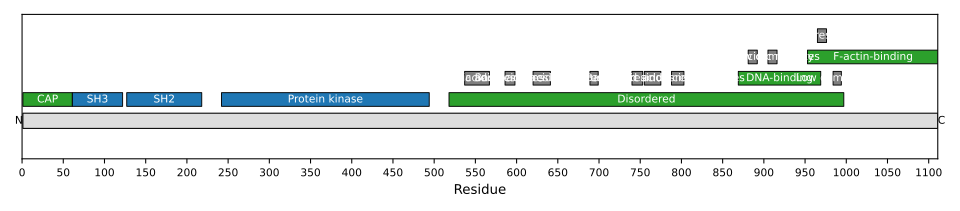
1: Non-receptor tyrosine-protein kinase that plays a role in many key processes linked to cell growth and survival such as cytoskeleton remodeling in response to extracellular stimuli, cell motility and adhesion, receptor endocytosis, autophagy, DNA damage response and apoptosis. Coordinates actin remodeling through tyrosine phosphorylation of proteins controlling cytoskeleton dynamics like WASF3 (involved in branch formation); ANXA1 (involved in membrane anchoring); DBN1, DBNL, CTTN, RAPH1 and ENAH (involved in signaling); or MAPT and PXN (microtubule-binding proteins). Phosphorylation of WASF3 is critical for the stimulation of lamellipodia formation and cell migration. Involved in the regulation of cell adhesion and motility through phosphorylation of key regulators of these processes such as BCAR1, CRK, CRKL, DOK1, EFS or NEDD9 (PubMed:22810897). Phosphorylates multiple receptor tyrosine kinases and more particularly promotes endocytosis of EGFR, facilitates the formation of neuromuscular synapses through MUSK, inhibits PDGFRB-mediated chemotaxis and modulates the endocytosis of activated B-cell receptor complexes. Other substrates which are involved in endocytosis regulation are the caveolin (CAV1) and RIN1. Moreover, ABL1 regulates the CBL family of ubiquitin ligases that drive receptor down-regulation and actin remodeling. Phosphorylation of CBL leads to increased EGFR stability. Involved in late-stage autophagy by regulating positively the trafficking and function of lysosomal components. ABL1 targets to mitochondria in response to oxidative stress and thereby mediates mitochondrial dysfunction and cell death. In response to oxidative stress, phosphorylates serine/threonine kinase PRKD2 at 'Tyr-717' (PubMed:28428613). ABL1 is also translocated in the nucleus where it has DNA-binding activity and is involved in DNA-damage response and apoptosis. Many substrates are known mediators of DNA repair: DDB1, DDB2, ERCC3, ERCC6, RAD9A, RAD51, RAD52 or WRN. Activates the proapoptotic pathway when the DNA damage is too severe to be repaired. Phosphorylates TP73, a primary regulator for this type of damage-induced apoptosis. Phosphorylates the caspase CASP9 on 'Tyr-153' and regulates its processing in the apoptotic response to DNA damage. Phosphorylates PSMA7 that leads to an inhibition of proteasomal activity and cell cycle transition blocks. ABL1 also acts as a regulator of multiple pathological signaling cascades during infection. Several known tyrosine-phosphorylated microbial proteins have been identified as ABL1 substrates. This is the case of A36R of Vaccinia virus, Tir (translocated intimin receptor) of pathogenic E.coli and possibly Citrobacter, CagA (cytotoxin-associated gene A) of H.pylori, or AnkA (ankyrin repeat-containing protein A) of A.phagocytophilum. Pathogens can highjack ABL1 kinase signaling to reorganize the host actin cytoskeleton for multiple purposes, like facilitating intracellular movement and host cell exit. Finally, functions as its own regulator through autocatalytic activity as well as through phosphorylation of its inhibitor, ABI1. Regulates T-cell differentiation in a TBX21-dependent manner (By similarity). Positively regulates chemokine-mediated T-cell migration, polarization, and homing to lymph nodes and immune-challenged tissues, potentially via activation of NEDD9/HEF1 and RAP1 (By similarity). Phosphorylates TBX21 on tyrosine residues leading to an enhancement of its transcriptional activator activity (By similarity)