Epidermal growth factor receptor (EC 2.7.10.1) (Proto-oncogene c-ErbB-1) (Receptor tyrosine-protein kinase erbB-1)
1_MRPSG 6_ TAGAA 11_ LLALL 16_ AALCP 21_ ASRAL 26_ EEKKV 31_ CQGTS 36_ NKLTQ 41_ LGTFE 46_ DHFLS 51_ LQRMF 56_ NNCEV 61_ VLGNL 66_ EITYV 71_ QRNYD 76_ LSFLK 81_ TIQEV 86_ AGYVL 91_ IALNT 96_ VERIP 101_ LENLQ 106_ IIRGN 111_ MYYEN 116_ SYALA 121_ VLSNY 126_ DANKT 131_ GLKEL 136_ PMRNL 141_ QEILH 146_ GAVRF 151_ SNNPA 156_ LCNVE 161_ SIQWR 166_ DIVSS 171_ DFLSN 176_ MSMDF 181_ QNHLG 186_ SCQKC 191_ DPSCP 196_ NGSCW 201_ GAGEE 206_ NCQKL 211_ TKIIC 216_ AQQCS 221_ GRCRG 226_ KSPSD 231_ CCHNQ 236_ CAAGC 241_ TGPRE 246_ SDCLV 251_ CRKFR 256_ DEATC 261_ KDTCP 266_ PLMLY 271_ NPTTY 276_ QMDVN 281_ PEGKY 286_ SFGAT 291_ CVKKC 296_ PRNYV 301_ VTDHG 306_ SCVRA 311_ CGADS 316_ YEMEE 321_ DGVRK 326_ CKKCE 331_ GPCRK 336_ VCNGI 341_ GIGEF 346_ KDSLS 351_ INATN 356_ IKHFK 361_ NCTSI 366_ SGDLH 371_ ILPVA 376_ FRGDS 381_ FTHTP 386_ PLDPQ 391_ ELDIL 396_ KTVKE 401_ ITGFL 406_ LIQAW 411_ PENRT 416_ DLHAF 421_ ENLEI 426_ IRGRT 431_ KQHGQ 436_ FSLAV 441_ VSLNI 446_ TSLGL 451_ RSLKE 456_ ISDGD 461_ VIISG 466_ NKNLC 471_ YANTI 476_ NWKKL 481_ FGTSG 486_ QKTKI 491_ ISNRG 496_ ENSCK 501_ ATGQV 506_ CHALC 511_ SPEGC 516_ WGPEP 521_ RDCVS 526_ CRNVS 531_ RGREC 536_ VDKCN 541_ LLEGE 546_ PREFV 551_ ENSEC 556_ IQCHP 561_ ECLPQ 566_ AMNIT 571_ CTGRG 576_ PDNCI 581_ QCAHY 586_ IDGPH 591_ CVKTC 596_ PAGVM 601_ GENNT 606_ LVWKY 611_ ADAGH 616_ VCHLC 621_ HPNCT 626_ YGCTG 631_ PGLEG 636_ CPTNG 641_ PKIPS 646_ IATGM 651_ VGALL 656_ LLLVV 661_ ALGIG 666_ LFMRR 671_ RHIVR 676_ KRTLR 681_ RLLQE 686_ RELVE 691_ PLTPS 696_ GEAPN 701_ QALLR 706_ ILKET 711_ EFKKI 716_ KVLGS 721_ GAFGT 726_ VYKGL 731_ WIPEG 736_ EKVKI 741_ PVAIK 746_ ELREA 751_ TSPKA 756_ NKEIL 761_ DEAYV 766_ MASVD 771_ NPHVC 776_ RLLGI 781_ CLTST 786_ VQLIT 791_ QLMPF 796_ GCLLD 801_ YVREH 806_ KDNIG 811_ SQYLL 816_ NWCVQ 821_ IAKGM 826_ NYLED 831_ RRLVH 836_ RDLAA 841_ RNVLV 846_ KTPQH 851_ VKITD 856_ FGLAK 861_ LLGAE 866_ EKEYH 871_ AEGGK 876_ VPIKW 881_ MALES 886_ ILHRI 891_ YTHQS 896_ DVWSY 901_ GVTVW 906_ ELMTF 911_ GSKPY 916_ DGIPA 921_ SEISS 926_ ILEKG 931_ ERLPQ 936_ PPICT 941_ IDVYM 946_ IMVKC 951_ WMIDA 956_ DSRPK 961_ FRELI 966_ IEFSK 971_ MARDP 976_ QRYLV 981_ IQGDE 986_ RMHLP 991_ SPTDS 996_ NFYRA 1001_ LMDEE 1006_ DMDDV 1011_ VDADE 1016_ YLIPQ 1021_ QGFFS 1026_ SPSTS 1031_ RTPLL 1036_ SSLSA 1041_ TSNNS 1046_ TVACI 1051_ DRNGL 1056_ QSCPI 1061_ KEDSF 1066_ LQRYS 1071_ SDPTG 1076_ ALTED 1081_ SIDDT 1086_ FLPVP 1091_ EYINQ 1096_ SVPKR 1101_ PAGSV 1106_ QNPVY 1111_ HNQPL 1116_ NPAPS 1121_ RDPHY 1126_ QDPHS 1131_ TAVGN 1136_ PEYLN 1141_ TVQPT 1146_ CVNST 1151_ FDSPA 1156_ HWAQK 1161_ GSHQI 1166_ SLDNP 1171_ DYQQD 1176_ FFPKE 1181_ AKPNG 1186_ IFKGS 1191_ TAENA 1196_ EYLRV 1201_APQSS
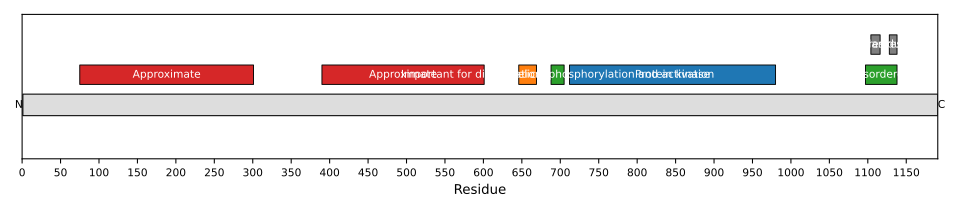
1: Receptor tyrosine kinase binding ligands of the EGF family and activating several signaling cascades to convert extracellular cues into appropriate cellular responses (PubMed:10805725, PubMed:27153536, PubMed:2790960, PubMed:35538033). Known ligands include EGF, TGFA/TGF-alpha, AREG, epigen/EPGN, BTC/betacellulin, epiregulin/EREG and HBEGF/heparin-binding EGF (PubMed:12297049, PubMed:15611079, PubMed:17909029, PubMed:20837704, PubMed:27153536, PubMed:2790960, PubMed:7679104, PubMed:8144591, PubMed:9419975). Ligand binding triggers receptor homo- and/or heterodimerization and autophosphorylation on key cytoplasmic residues. The phosphorylated receptor recruits adapter proteins like GRB2 which in turn activates complex downstream signaling cascades. Activates at least 4 major downstream signaling cascades including the RAS-RAF-MEK-ERK, PI3 kinase-AKT, PLCgamma-PKC and STATs modules (PubMed:27153536). May also activate the NF-kappa-B signaling cascade (PubMed:11116146). Also directly phosphorylates other proteins like RGS16, activating its GTPase activity and probably coupling the EGF receptor signaling to the G protein-coupled receptor signaling (PubMed:11602604). Also phosphorylates MUC1 and increases its interaction with SRC and CTNNB1/beta-catenin (PubMed:11483589). Positively regulates cell migration via interaction with CCDC88A/GIV which retains EGFR at the cell membrane following ligand stimulation, promoting EGFR signaling which triggers cell migration (PubMed:20462955). Plays a role in enhancing learning and memory performance (By similarity). Plays a role in mammalian pain signaling (long-lasting hypersensitivity) (By similarity)
2: Isoform 2 may act as an antagonist of EGF action
3: (Microbial infection) Acts as a receptor for hepatitis C virus (HCV) in hepatocytes and facilitates its cell entry. Mediates HCV entry by promoting the formation of the CD81-CLDN1 receptor complexes that are essential for HCV entry and by enhancing membrane fusion of cells expressing HCV envelope glycoproteins