Beta-nerve growth factor (Beta-NGF)
1_MSMLF 6_ YTLIT 11_ AFLIG 16_ IQAEP 21_ HSESN 26_ VPAGH 31_ TIPQA 36_ HWTKL 41_ QHSLD 46_ TALRR 51_ ARSAP 56_ AAAIA 61_ ARVAG 66_ QTRNI 71_ TVDPR 76_ LFKKR 81_ RLRSP 86_ RVLFS 91_ TQPPR 96_ EAADT 101_ QDLDF 106_ EVGGA 111_ APFNR 116_ THRSK 121_ RSSSH 126_ PIFHR 131_ GEFSV 136_ CDSVS 141_ VWVGD 146_ KTTAT 151_ DIKGK 156_ EVMVL 161_ GEVNI 166_ NNSVF 171_ KQYFF 176_ ETKCR 181_ DPNPV 186_ DSGCR 191_ GIDSK 196_ HWNSY 201_ CTTTH 206_ TFVKA 211_ LTMDG 216_ KQAAW 221_ RFIRI 226_ DTACV 231_ CVLSR 236_KAVRR
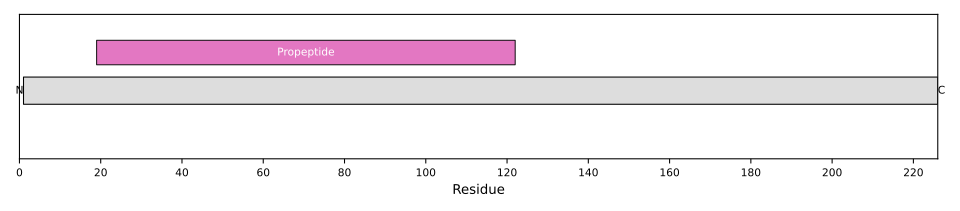
1: Nerve growth factor is important for the development and maintenance of the sympathetic and sensory nervous systems (PubMed:14976160, PubMed:20978020). Extracellular ligand for the NTRK1 and NGFR receptors, activates cellular signaling cascades to regulate neuronal proliferation, differentiation and survival (Probable) (PubMed:20978020). The immature NGF precursor (proNGF) functions as a ligand for the heterodimeric receptor formed by SORCS2 and NGFR, and activates cellular signaling cascades that lead to inactivation of RAC1 and/or RAC2, reorganization of the actin cytoskeleton and neuronal growth cone collapse. In contrast to mature NGF, the precursor form (proNGF) promotes neuronal apoptosis (in vitro) (By similarity). Inhibits metalloproteinase-dependent proteolysis of platelet glycoprotein VI (PubMed:20164177). Binds lysophosphatidylinositol and lysophosphatidylserine between the two chains of the homodimer. The lipid-bound form promotes histamine relase from mast cells, contrary to the lipid-free form (By similarity)