Proenkephalin-A [Cleaved into: Synenkephalin; Met-enkephalin (Opioid growth factor) (OGF); PENK(114-133); PENK(143-183); Met-enkephalin-Arg-Gly-Leu; Leu-enkephalin; PENK(237-258); Met-enkephalin-Arg-Phe]
1_MARFL 6_ TLCTW 11_ LLLLG 16_ PGLLA 21_ TVRAE 26_ CSQDC 31_ ATCSY 36_ RLVRP 41_ ADINF 46_ LACVM 51_ ECEGK 56_ LPSLK 61_ IWETC 66_ KELLQ 71_ LSKPE 76_ LPQDG 81_ TSTLR 86_ ENSKP 91_ EESHL 96_ LAKRY 101_ GGFMK 106_ RYGGF 111_ MKKMD 116_ ELYPM 121_ EPEEE 126_ ANGSE 131_ ILAKR 136_ YGGFM 141_ KKDAE 146_ EDDSL 151_ ANSSD 156_ LLKEL 161_ LETGD 166_ NRERS 171_ HHQDG 176_ SDNEE 181_ EVSKR 186_ YGGFM 191_ RGLKR 196_ SPQLE 201_ DEAKE 206_ LQKRY 211_ GGFMR 216_ RVGRP 221_ EWWMD 226_ YQKRY 231_ GGFLK 236_ RFAEA 241_ LPSDE 246_ EGESY 251_ SKEVP 256_ EMEKR 261_YGGFM
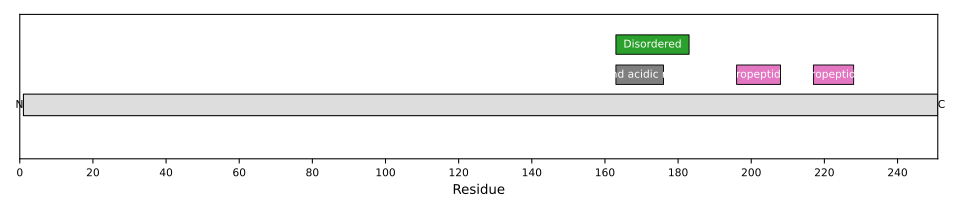
1: Neuropeptide that competes with and mimic the effects of opiate drugs. They play a role in a number of physiologic functions, including pain perception and responses to stress
2: Neuropeptide that competes with and mimic the effects of opiate drugs. They play a role in a number of physiologic functions, including pain perception and responses to stress
3: Met-enkephalin-Arg-Phe neuropeptide acts as a strong ligand of Mu-type opioid receptor OPRM1. Met-enkephalin-Arg-Phe-binding to OPRM1 in the nucleus accumbens of the brain increases activation of OPRM1, leading to long-term synaptic depression of glutamate release
4: Increases glutamate release in the striatum and decreases GABA concentration in the striatum
5: Increases glutamate release in the striatum