Tumor necrosis factor (Cachectin) (TNF-alpha) (Tumor necrosis factor ligand superfamily member 2) (TNF-a) [Cleaved into: Tumor necrosis factor, membrane form (N-terminal fragment) (NTF); Intracellular domain 1 (ICD1); Intracellular domain 2 (ICD2); C-domain 1; C-domain 2; Tumor necrosis factor, soluble form]
1_MSTES 6_ MIRDV 11_ ELAEE 16_ ALPKK 21_ TGGPQ 26_ GSRRC 31_ LFLSL 36_ FSFLI 41_ VAGAT 46_ TLFCL 51_ LHFGV 56_ IGPQR 61_ EEFPR 66_ DLSLI 71_ SPLAQ 76_ AVRSS 81_ SRTPS 86_ DKPVA 91_ HVVAN 96_ PQAEG 101_ QLQWL 106_ NRRAN 111_ ALLAN 116_ GVELR 121_ DNQLV 126_ VPSEG 131_ LYLIY 136_ SQVLF 141_ KGQGC 146_ PSTHV 151_ LLTHT 156_ ISRIA 161_ VSYQT 166_ KVNLL 171_ SAIKS 176_ PCQRE 181_ TPEGA 186_ EAKPW 191_ YEPIY 196_ LGGVF 201_ QLEKG 206_ DRLSA 211_ EINRP 216_ DYLDF 221_ AESGQ 226_VYFGI
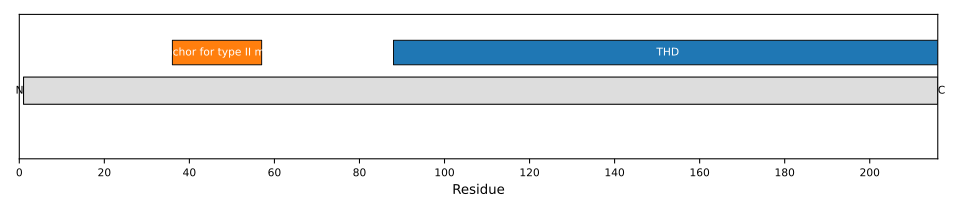
1: Cytokine that binds to TNFRSF1A/TNFR1 and TNFRSF1B/TNFBR. It is mainly secreted by macrophages and can induce cell death of certain tumor cell lines. It is potent pyrogen causing fever by direct action or by stimulation of interleukin-1 secretion and is implicated in the induction of cachexia, Under certain conditions it can stimulate cell proliferation and induce cell differentiation. Impairs regulatory T-cells (Treg) function in individuals with rheumatoid arthritis via FOXP3 dephosphorylation. Up-regulates the expression of protein phosphatase 1 (PP1), which dephosphorylates the key 'Ser-418' residue of FOXP3, thereby inactivating FOXP3 and rendering Treg cells functionally defective (PubMed:23396208). Key mediator of cell death in the anticancer action of BCG-stimulated neutrophils in combination with DIABLO/SMAC mimetic in the RT4v6 bladder cancer cell line (PubMed:16829952, PubMed:22517918, PubMed:23396208). Induces insulin resistance in adipocytes via inhibition of insulin-induced IRS1 tyrosine phosphorylation and insulin-induced glucose uptake. Induces GKAP42 protein degradation in adipocytes which is partially responsible for TNF-induced insulin resistance (By similarity). Plays a role in angiogenesis by inducing VEGF production synergistically with IL1B and IL6 (PubMed:12794819). Promotes osteoclastogenesis and therefore mediates bone resorption (By similarity)
2: The TNF intracellular domain (ICD) form induces IL12 production in dendritic cells