Interferon gamma (IFN-gamma) (Immune interferon)
1_MKYTS 6_ YILAF 11_ QLCIV 16_ LGSLG 21_ CYCQD 26_ PYVKE 31_ AENLK 36_ KYFNA 41_ GHSDV 46_ ADNGT 51_ LFLGI 56_ LKNWK 61_ EESDR 66_ KIMQS 71_ QIVSF 76_ YFKLF 81_ KNFKD 86_ DQSIQ 91_ KSVET 96_ IKEDM 101_ NVKFF 106_ NSNKK 111_ KRDDF 116_ EKLTN 121_ YSVTD 126_ LNVQR 131_ KAIHE 136_ LIQVM 141_ AELSP 146_ AAKTG 151_ KRKRS 156_ QMLFR 161_GRRAS
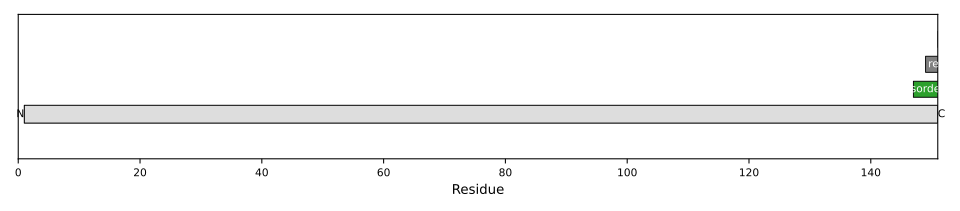
1: Type II interferon produced by immune cells such as T-cells and NK cells that plays crucial roles in antimicrobial, antiviral, and antitumor responses by activating effector immune cells and enhancing antigen presentation (PubMed:16914093, PubMed:8666937). Primarily signals through the JAK-STAT pathway after interaction with its receptor IFNGR1 to affect gene regulation (PubMed:8349687). Upon IFNG binding, IFNGR1 intracellular domain opens out to allow association of downstream signaling components JAK2, JAK1 and STAT1, leading to STAT1 activation, nuclear translocation and transcription of IFNG-regulated genes. Many of the induced genes are transcription factors such as IRF1 that are able to further drive regulation of a next wave of transcription (PubMed:16914093). Plays a role in class I antigen presentation pathway by inducing a replacement of catalytic proteasome subunits with immunoproteasome subunits (PubMed:8666937). In turn, increases the quantity, quality, and repertoire of peptides for class I MHC loading (PubMed:8163024). Increases the efficiency of peptide generation also by inducing the expression of activator PA28 that associates with the proteasome and alters its proteolytic cleavage preference (PubMed:11112687). Up-regulates as well MHC II complexes on the cell surface by promoting expression of several key molecules such as cathepsins B/CTSB, H/CTSH, and L/CTSL (PubMed:7729559). Participates in the regulation of hematopoietic stem cells during development and under homeostatic conditions by affecting their development, quiescence, and differentiation (By similarity)