T-cell surface glycoprotein CD8 alpha chain (T-lymphocyte differentiation antigen T8/Leu-2) (CD antigen CD8a)
1_MALPV 6_ TALLL 11_ PLALL 16_ LHAAR 21_ PSQFR 26_ VSPLD 31_ RTWNL 36_ GETVE 41_ LKCQV 46_ LLSNP 51_ TSGCS 56_ WLFQP 61_ RGAAA 66_ SPTFL 71_ LYLSQ 76_ NKPKA 81_ AEGLD 86_ TQRFS 91_ GKRLG 96_ DTFVL 101_ TLSDF 106_ RRENE 111_ GYYFC 116_ SALSN 121_ SIMYF 126_ SHFVP 131_ VFLPA 136_ KPTTT 141_ PAPRP 146_ PTPAP 151_ TIASQ 156_ PLSLR 161_ PEACR 166_ PAAGG 171_ AVHTR 176_ GLDFA 181_ CDIYI 186_ WAPLA 191_ GTCGV 196_ LLLSL 201_ VITLY 206_ CNHRN 211_ RRRVC 216_ KCPRP 221_ VVKSG 226_DKPSL
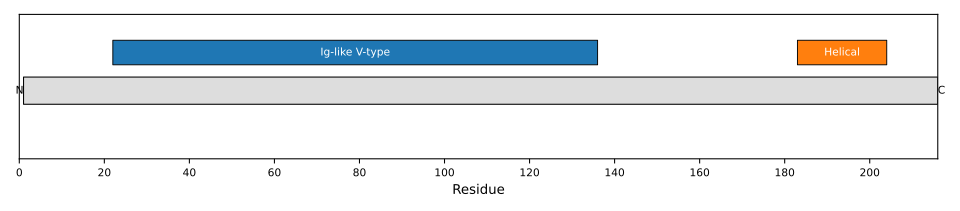
1: Integral membrane glycoprotein that plays an essential role in the immune response and serves multiple functions in responses against both external and internal offenses. In T-cells, functions primarily as a coreceptor for MHC class I molecule:peptide complex. The antigens presented by class I peptides are derived from cytosolic proteins while class II derived from extracellular proteins. Interacts simultaneously with the T-cell receptor (TCR) and the MHC class I proteins presented by antigen presenting cells (APCs). In turn, recruits the Src kinase LCK to the vicinity of the TCR-CD3 complex. LCK then initiates different intracellular signaling pathways by phosphorylating various substrates ultimately leading to lymphokine production, motility, adhesion and activation of cytotoxic T-lymphocytes (CTLs). This mechanism enables CTLs to recognize and eliminate infected cells and tumor cells. In NK-cells, the presence of CD8A homodimers at the cell surface provides a survival mechanism allowing conjugation and lysis of multiple target cells. CD8A homodimer molecules also promote the survival and differentiation of activated lymphocytes into memory CD8 T-cells