Immunoglobulin heavy constant gamma 4 (Ig gamma-4 chain C region)
1_ASTKG 6_ PSVFP 11_ LAPCS 16_ RSTSE 21_ STAAL 26_ GCLVK 31_ DYFPE 36_ PVTVS 41_ WNSGA 46_ LTSGV 51_ HTFPA 56_ VLQSS 61_ GLYSL 66_ SSVVT 71_ VPSSS 76_ LGTKT 81_ YTCNV 86_ DHKPS 91_ NTKVD 96_ KRVES 101_ KYGPP 106_ CPSCP 111_ APEFL 116_ GGPSV 121_ FLFPP 126_ KPKDT 131_ LMISR 136_ TPEVT 141_ CVVVD 146_ VSQED 151_ PEVQF 156_ NWYVD 161_ GVEVH 166_ NAKTK 171_ PREEQ 176_ FNSTY 181_ RVVSV 186_ LTVLH 191_ QDWLN 196_ GKEYK 201_ CKVSN 206_ KGLPS 211_ SIEKT 216_ ISKAK 221_ GQPRE 226_ PQVYT 231_ LPPSQ 236_ EEMTK 241_ NQVSL 246_ TCLVK 251_ GFYPS 256_ DIAVE 261_ WESNG 266_ QPENN 271_ YKTTP 276_ PVLDS 281_ DGSFF 286_ LYSRL 291_ TVDKS 296_ RWQEG 301_ NVFSC 306_ SVMHE 311_ ALHNH 316_ YTQKS 321_LSLSL
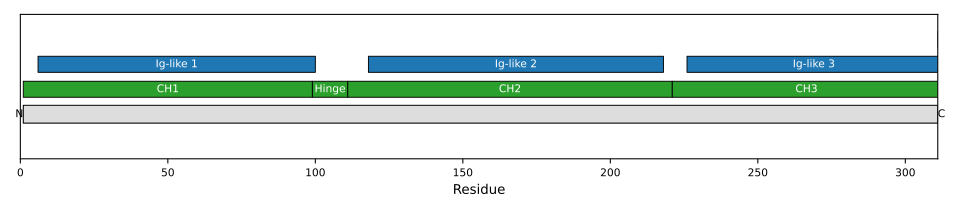
1: Constant region of immunoglobulin heavy chains. Immunoglobulins, also known as antibodies, are membrane-bound or secreted glycoproteins produced by B lymphocytes. In the recognition phase of humoral immunity, the membrane-bound immunoglobulins serve as receptors which, upon binding of a specific antigen, trigger the clonal expansion and differentiation of B lymphocytes into immunoglobulins-secreting plasma cells. Secreted immunoglobulins mediate the effector phase of humoral immunity, which results in the elimination of bound antigens (PubMed:20176268, PubMed:22158414). The antigen binding site is formed by the variable domain of one heavy chain, together with that of its associated light chain. Thus, each immunoglobulin has two antigen binding sites with remarkable affinity for a particular antigen. The variable domains are assembled by a process called V-(D)-J rearrangement and can then be subjected to somatic hypermutations which, after exposure to antigen and selection, allow affinity maturation for a particular antigen (PubMed:17576170, PubMed:20176268)