HLA class II histocompatibility antigen, DR alpha chain (MHC class II antigen DRA)
1_MAISG 6_ VPVLG 11_ FFIIA 16_ VLMSA 21_ QESWA 26_ IKEEH 31_ VIIQA 36_ EFYLN 41_ PDQSG 46_ EFMFD 51_ FDGDE 56_ IFHVD 61_ MAKKE 66_ TVWRL 71_ EEFGR 76_ FASFE 81_ AQGAL 86_ ANIAV 91_ DKANL 96_ EIMTK 101_ RSNYT 106_ PITNV 111_ PPEVT 116_ VLTNS 121_ PVELR 126_ EPNVL 131_ ICFID 136_ KFTPP 141_ VVNVT 146_ WLRNG 151_ KPVTT 156_ GVSET 161_ VFLPR 166_ EDHLF 171_ RKFHY 176_ LPFLP 181_ STEDV 186_ YDCRV 191_ EHWGL 196_ DEPLL 201_ KHWEF 206_ DAPSP 211_ LPETT 216_ ENVVC 221_ ALGLT 226_ VGLVG 231_ IIIGT 236_ IFIIK 241_ GLRKS 246_NAAER
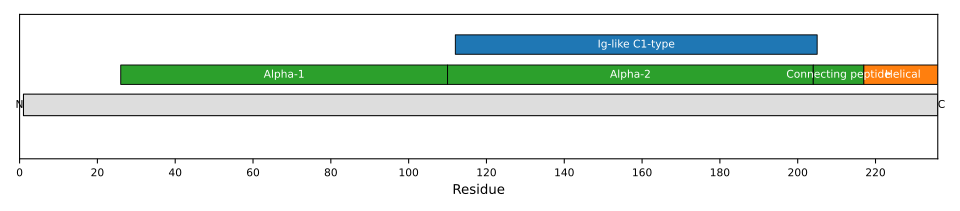
1: An alpha chain of antigen-presenting major histocompatibility complex class II (MHCII) molecule. In complex with the beta chain HLA-DRB, displays antigenic peptides on professional antigen presenting cells (APCs) for recognition by alpha-beta T cell receptor (TCR) on HLA-DR-restricted CD4-positive T cells. This guides antigen-specific T-helper effector functions, both antibody-mediated immune response and macrophage activation, to ultimately eliminate the infectious agents and transformed cells (PubMed:15265931, PubMed:15322540, PubMed:17334368, PubMed:22327072, PubMed:24190431, PubMed:27591323, PubMed:29884618, PubMed:31495665, PubMed:8145819, PubMed:9075930). Typically presents extracellular peptide antigens of 10 to 30 amino acids that arise from proteolysis of endocytosed antigens in lysosomes (PubMed:8145819). In the tumor microenvironment, presents antigenic peptides that are primarily generated in tumor-resident APCs likely via phagocytosis of apoptotic tumor cells or macropinocytosis of secreted tumor proteins (PubMed:31495665). Presents peptides derived from intracellular proteins that are trapped in autolysosomes after macroautophagy, a mechanism especially relevant for T cell selection in the thymus and central immune tolerance (PubMed:17182262, PubMed:23783831). The selection of the immunodominant epitopes follows two processing modes: 'bind first, cut/trim later' for pathogen-derived antigenic peptides and 'cut first, bind later' for autoantigens/self-peptides (PubMed:25413013). The anchor residue at position 1 of the peptide N-terminus, usually a large hydrophobic residue, is essential for high affinity interaction with MHCII molecules (PubMed:8145819)