Prelamin-A/C [Cleaved into: Lamin-A/C (70 kDa lamin) (Renal carcinoma antigen NY-REN-32)]
1_METPS 6_ QRRAT 11_ RSGAQ 16_ ASSTP 21_ LSPTR 26_ ITRLQ 31_ EKEDL 36_ QELND 41_ RLAVY 46_ IDRVR 51_ SLETE 56_ NAGLR 61_ LRITE 66_ SEEVV 71_ SREVS 76_ GIKAA 81_ YEAEL 86_ GDARK 91_ TLDSV 96_ AKERA 101_ RLQLE 106_ LSKVR 111_ EEFKE 116_ LKARN 121_ TKKEG 126_ DLIAA 131_ QARLK 136_ DLEAL 141_ LNSKE 146_ AALST 151_ ALSEK 156_ RTLEG 161_ ELHDL 166_ RGQVA 171_ KLEAA 176_ LGEAK 181_ KQLQD 186_ EMLRR 191_ VDAEN 196_ RLQTM 201_ KEELD 206_ FQKNI 211_ YSEEL 216_ RETKR 221_ RHETR 226_ LVEID 231_ NGKQR 236_ EFESR 241_ LADAL 246_ QELRA 251_ QHEDQ 256_ VEQYK 261_ KELEK 266_ TYSAK 271_ LDNAR 276_ QSAER 281_ NSNLV 286_ GAAHE 291_ ELQQS 296_ RIRID 301_ SLSAQ 306_ LSQLQ 311_ KQLAA 316_ KEAKL 321_ RDLED 326_ SLARE 331_ RDTSR 336_ RLLAE 341_ KEREM 346_ AEMRA 351_ RMQQQ 356_ LDEYQ 361_ ELLDI 366_ KLALD 371_ MEIHA 376_ YRKLL 381_ EGEEE 386_ RLRLS 391_ PSPTS 396_ QRSRG 401_ RASSH 406_ SSQTQ 411_ GGGSV 416_ TKKRK 421_ LESTE 426_ SRSSF 431_ SQHAR 436_ TSGRV 441_ AVEEV 446_ DEEGK 451_ FVRLR 456_ NKSNE 461_ DQSMG 466_ NWQIK 471_ RQNGD 476_ DPLLT 481_ YRFPP 486_ KFTLK 491_ AGQVV 496_ TIWAA 501_ GAGAT 506_ HSPPT 511_ DLVWK 516_ AQNTW 521_ GCGNS 526_ LRTAL 531_ INSTG 536_ EEVAM 541_ RKLVR 546_ SVTVV 551_ EDDED 556_ EDGDD 561_ LLHHH 566_ HGSHC 571_ SSSGD 576_ PAEYN 581_ LRSRT 586_ VLCGT 591_ CGQPA 596_ DKASA 601_ SGSGA 606_ QVGGP 611_ ISSGS 616_ SASSV 621_ TVTRS 626_ YRSVG 631_ GSGGG 636_ SFGDN 641_ LVTRS 646_ YLLGN 651_ SSPRT 656_QSPQN
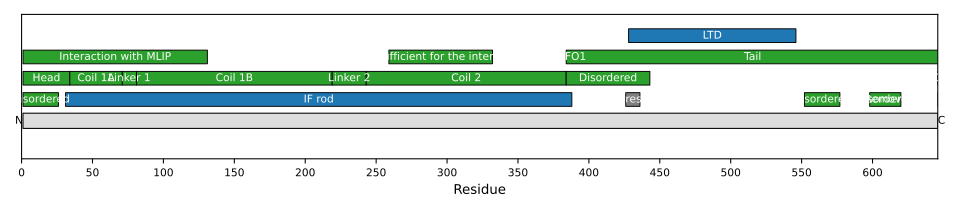
1: Lamins are intermediate filament proteins that assemble into a filamentous meshwork, and which constitute the major components of the nuclear lamina, a fibrous layer on the nucleoplasmic side of the inner nuclear membrane (PubMed:10080180, PubMed:10580070, PubMed:10587585, PubMed:10814726, PubMed:11799477, PubMed:12075506, PubMed:12927431, PubMed:15317753, PubMed:18551513, PubMed:18611980, PubMed:2188730, PubMed:22431096, PubMed:2344612, PubMed:23666920, PubMed:24741066, PubMed:31434876, PubMed:31548606, PubMed:37788673, PubMed:37832547). Lamins provide a framework for the nuclear envelope, bridging the nuclear envelope and chromatin, thereby playing an important role in nuclear assembly, chromatin organization, nuclear membrane and telomere dynamics (PubMed:10080180, PubMed:10580070, PubMed:10587585, PubMed:10814726, PubMed:11799477, PubMed:12075506, PubMed:12927431, PubMed:15317753, PubMed:18551513, PubMed:18611980, PubMed:22431096, PubMed:23666920, PubMed:24741066, PubMed:31548606, PubMed:37788673, PubMed:37832547). Lamin A and C also regulate matrix stiffness by conferring nuclear mechanical properties (PubMed:23990565, PubMed:25127216). The structural integrity of the lamina is strictly controlled by the cell cycle, as seen by the disintegration and formation of the nuclear envelope in prophase and telophase, respectively (PubMed:2188730, PubMed:2344612). Lamin A and C are present in equal amounts in the lamina of mammals (PubMed:10080180, PubMed:10580070, PubMed:10587585, PubMed:10814726, PubMed:11799477, PubMed:12075506, PubMed:12927431, PubMed:15317753, PubMed:18551513, PubMed:18611980, PubMed:22431096, PubMed:23666920, PubMed:31548606). Also invoved in DNA repair: recruited by DNA repair proteins XRCC4 and IFFO1 to the DNA double-strand breaks (DSBs) to prevent chromosome translocation by immobilizing broken DNA ends (PubMed:31548606). Required for normal development of peripheral nervous system and skeletal muscle and for muscle satellite cell proliferation (PubMed:10080180, PubMed:10814726, PubMed:11799477, PubMed:18551513, PubMed:22431096). Required for osteoblastogenesis and bone formation (PubMed:12075506, PubMed:15317753, PubMed:18611980). Also prevents fat infiltration of muscle and bone marrow, helping to maintain the volume and strength of skeletal muscle and bone (PubMed:10587585). Required for cardiac homeostasis (PubMed:10580070, PubMed:12927431, PubMed:18611980, PubMed:23666920)
2: Prelamin-A/C can accelerate smooth muscle cell senescence (PubMed:20458013). It acts to disrupt mitosis and induce DNA damage in vascular smooth muscle cells (VSMCs), leading to mitotic failure, genomic instability, and premature senescence (PubMed:20458013)