Myelin basic protein (MBP) (Myelin A1 protein) (Myelin membrane encephalitogenic protein)
1_MGNHA 6_ GKREL 11_ NAEKA 16_ STNSE 21_ TNRGE 26_ SEKKR 31_ NLGEL 36_ SRTTS 41_ EDNEV 46_ FGEAD 51_ ANQNN 56_ GTSSQ 61_ DTAVT 66_ DSKRT 71_ ADPKN 76_ AWQDA 81_ HPADP 86_ GSRPH 91_ LIRLF 96_ SRDAP 101_ GREDN 106_ TFKDR 111_ PSESD 116_ ELQTI 121_ QEDSA 126_ ATSES 131_ LDVMA 136_ SQKRP 141_ SQRHG 146_ SKYLA 151_ TASTM 156_ DHARH 161_ GFLPR 166_ HRDTG 171_ ILDSI 176_ GRFFG 181_ GDRGA 186_ PKRGS 191_ GKDSH 196_ HPART 201_ AHYGS 206_ LPQKS 211_ HGRTQ 216_ DENPV 221_ VHFFK 226_ NIVTP 231_ RTPPP 236_ SQGKG 241_ RGLSL 246_ SRFSW 251_ GAEGQ 256_ RPGFG 261_ YGGRA 266_ SDYKS 271_ AHKGF 276_ KGVDA 281_ QGTLS 286_ KIFKL 291_ GGRDS 296_RSGSP
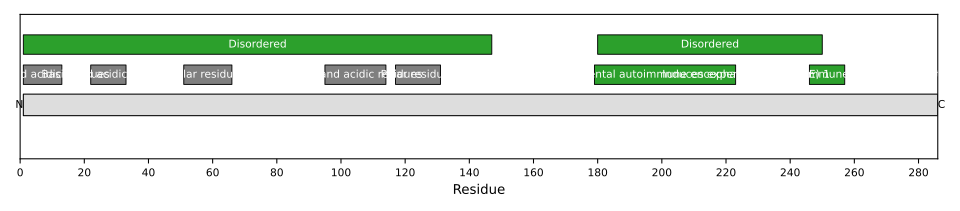
1: The classic group of MBP isoforms (isoform 4-isoform 14) are with PLP the most abundant protein components of the myelin membrane in the CNS. They have a role in both its formation and stabilization. The smaller isoforms might have an important role in remyelination of denuded axons in multiple sclerosis. The non-classic group of MBP isoforms (isoform 1-isoform 3/Golli-MBPs) may preferentially have a role in the early developing brain long before myelination, maybe as components of transcriptional complexes, and may also be involved in signaling pathways in T-cells and neural cells. Differential splicing events combined with optional post-translational modifications give a wide spectrum of isomers, with each of them potentially having a specialized function. Induces T-cell proliferation