Complement C1q subcomponent subunit A
1_MEGPR 6_ GWLVL 11_ CVLAI 16_ SLASM 21_ VTEDL 26_ CRAPD 31_ GKKGE 36_ AGRPG 41_ RRGRP 46_ GLKGE 51_ QGEPG 56_ APGIR 61_ TGIQG 66_ LKGDQ 71_ GEPGP 76_ SGNPG 81_ KVGYP 86_ GPSGP 91_ LGARG 96_ IPGIK 101_ GTKGS 106_ PGNIK 111_ DQPRP 116_ AFSAI 121_ RRNPP 126_ MGGNV 131_ VIFDT 136_ VITNQ 141_ EEPYQ 146_ NHSGR 151_ FVCTV 156_ PGYYY 161_ FTFQV 166_ LSQWE 171_ ICLSI 176_ VSSSR 181_ GQVRR 186_ SLGFC 191_ DTTNK 196_ GLFQV 201_ VSGGM 206_ VLQLQ 211_ QGDQV 216_ WVEKD 221_ PKKGH 226_ IYQGS 231_ EADSV 236_FSGFL
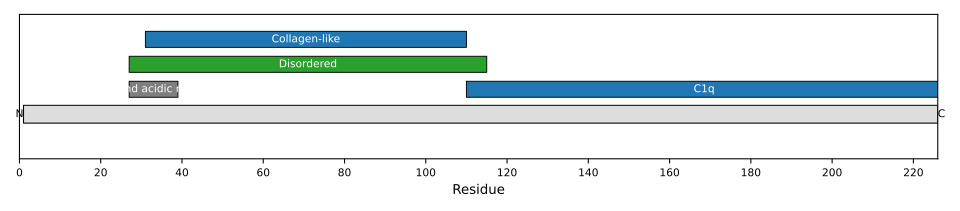
1: Core component of the complement C1 complex, a multiprotein complex that initiates the classical pathway of the complement system, a cascade of proteins that leads to phagocytosis and breakdown of pathogens and signaling that strengthens the adaptive immune system (PubMed:12847249, PubMed:19006321, PubMed:24626930, PubMed:29449492, PubMed:3258649, PubMed:34155115, PubMed:6249812, PubMed:6776418). The classical complement pathway is initiated by the C1Q subcomplex of the C1 complex, which specifically binds IgG or IgM immunoglobulins complexed with antigens, forming antigen-antibody complexes on the surface of pathogens: C1QA, together with C1QB and C1QC, specifically recognizes and binds the Fc regions of IgG or IgM via its C1q domain (PubMed:12847249, PubMed:19006321, PubMed:24626930, PubMed:29449492, PubMed:3258649, PubMed:6776418). Immunoglobulin-binding activates the proenzyme C1R, which cleaves C1S, initiating the proteolytic cascade of the complement system (PubMed:29449492). The C1Q subcomplex is activated by a hexamer of IgG complexed with antigens, while it is activated by a pentameric IgM (PubMed:19706439, PubMed:24626930, PubMed:29449492). The C1Q subcomplex also recognizes and binds phosphatidylserine exposed on the surface of cells undergoing programmed cell death, possibly promoting activation of the complement system (PubMed:18250442)