Phospholipase A2 (EC 3.1.1.4) (Group IB phospholipase A2) (Phosphatidylcholine 2-acylhydrolase 1B)
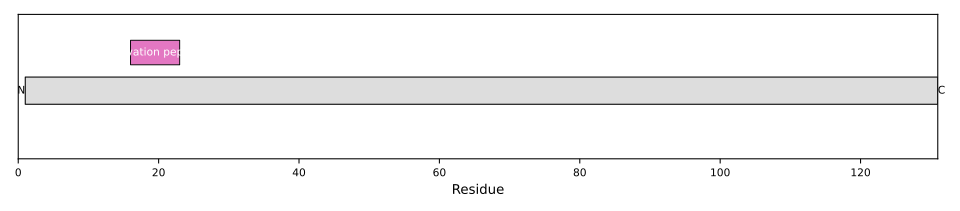
1_MKLLV 6_ LAVLL 11_ TVAAA 16_ DSGIS 21_ PRAVW 26_ QFRKM 31_ IKCVI 36_ PGSDP 41_ FLEYN 46_ NYGCY 51_ CGLGG 56_ SGTPV 61_ DELDK 66_ CCQTH 71_ DNCYD 76_ QAKKL 81_ DSCKF 86_ LLDNP 91_ YTHTY 96_ SYSCS 101_ GSAIT 106_ CSSKN 111_ KECEA 116_ FICNC 121_ DRNAA 126_ ICFSK 131_ APYNK 136_ AHKNL 141_DTKKY
1: Secretory calcium-dependent phospholipase A2 that primarily targets dietary phospholipids in the intestinal tract (PubMed:10681567, PubMed:1420353, PubMed:17603006). Hydrolyzes the ester bond of the fatty acyl group attached at sn-2 position of phospholipids (phospholipase A2 activity) with preference for phosphatidylethanolamines and phosphatidylglycerols over phosphatidylcholines (PubMed:10681567, PubMed:1420353, PubMed:17603006). May play a role in the biosynthesis of N-acyl ethanolamines that regulate energy metabolism and inflammation in the intestinal tract. Hydrolyzes N-acyl phosphatidylethanolamines to N-acyl lysophosphatidylethanolamines, which are further cleaved by a lysophospholipase D to release N-acyl ethanolamines (By similarity). May act in an autocrine and paracrine manner (PubMed:25335547, PubMed:7721806). Upon binding to the PLA2R1 receptor can regulate podocyte survival and glomerular homeostasis (PubMed:25335547). Has anti-helminth activity in a process regulated by gut microbiota. Upon helminth infection of intestinal epithelia, directly affects phosphatidylethanolamine contents in the membrane of helminth larvae, likely controlling an array of phospholipid-mediated cellular processes such as membrane fusion and cell division while providing for better immune recognition, ultimately reducing larvae integrity and infectivity (By similarity)