Protein kinase C gamma type (PKC-gamma) (EC 2.7.11.13)
1_MAGLG 6_ PGVGD 11_ SEGGP 16_ RPLFC 21_ RKGAL 26_ RQKVV 31_ HEVKS 36_ HKFTA 41_ RFFKQ 46_ PTFCS 51_ HCTDF 56_ IWGIG 61_ KQGLQ 66_ CQVCS 71_ FVVHR 76_ RCHEF 81_ VTFEC 86_ PGAGK 91_ GPQTD 96_ DPRNK 101_ HKFRL 106_ HSYSS 111_ PTFCD 116_ HCGSL 121_ LYGLV 126_ HQGMK 131_ CSCCE 136_ MNVHR 141_ RCVRS 146_ VPSLC 151_ GVDHT 156_ ERRGR 161_ LQLEI 166_ RAPTA 171_ DEIHV 176_ TVGEA 181_ RNLIP 186_ MDPNG 191_ LSDPY 196_ VKLKL 201_ IPDPR 206_ NLTKQ 211_ KTRTV 216_ KATLN 221_ PVWNE 226_ TFVFN 231_ LKPGD 236_ VERRL 241_ SVEVW 246_ DWDRT 251_ SRNDF 256_ MGAMS 261_ FGVSE 266_ LLKAP 271_ VDGWY 276_ KLLNQ 281_ EEGEY 286_ YNVPV 291_ ADADN 296_ CSLLQ 301_ KFEAC 306_ NYPLE 311_ LYERV 316_ RMGPS 321_ SSPIP 326_ SPSPS 331_ PTDPK 336_ RCFFG 341_ ASPGR 346_ LHISD 351_ FSFLM 356_ VLGKG 361_ SFGKV 366_ MLAER 371_ RGSDE 376_ LYAIK 381_ ILKKD 386_ VIVQD 391_ DDVDC 396_ TLVEK 401_ RVLAL 406_ GGRGP 411_ GGRPH 416_ FLTQL 421_ HSTFQ 426_ TPDRL 431_ YFVME 436_ YVTGG 441_ DLMYH 446_ IQQLG 451_ KFKEP 456_ HAAFY 461_ AAEIA 466_ IGLFF 471_ LHNQG 476_ IIYRD 481_ LKLDN 486_ VMLDA 491_ EGHIK 496_ ITDFG 501_ MCKEN 506_ VFPGT 511_ TTRTF 516_ CGTPD 521_ YIAPE 526_ IIAYQ 531_ PYGKS 536_ VDWWS 541_ FGVLL 546_ YEMLA 551_ GQPPF 556_ DGEDE 561_ EELFQ 566_ AIMEQ 571_ TVTYP 576_ KSLSR 581_ EAVAI 586_ CKGFL 591_ TKHPG 596_ KRLGS 601_ GPDGE 606_ PTIRA 611_ HGFFR 616_ WIDWE 621_ RLERL 626_ EIPPP 631_ FRPRP 636_ CGRSG 641_ ENFDK 646_ FFTRA 651_ APALT 656_ PPDRL 661_ VLASI 666_ DQADF 671_ QGFTY 676_ VNPDF 681_ VHPDA 686_ RSPTS 691_PVPVP
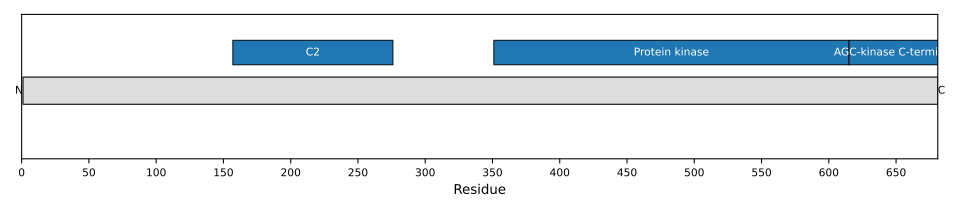
1: Calcium-activated, phospholipid- and diacylglycerol (DAG)-dependent serine/threonine-protein kinase that plays diverse roles in neuronal cells and eye tissues, such as regulation of the neuronal receptors GRIA4/GLUR4 and GRIN1/NMDAR1, modulation of receptors and neuronal functions related to sensitivity to opiates, pain and alcohol, mediation of synaptic function and cell survival after ischemia, and inhibition of gap junction activity after oxidative stress. Binds and phosphorylates GRIA4/GLUR4 glutamate receptor and regulates its function by increasing plasma membrane-associated GRIA4 expression. In primary cerebellar neurons treated with the agonist 3,5-dihyidroxyphenylglycine, functions downstream of the metabotropic glutamate receptor GRM5/MGLUR5 and phosphorylates GRIN1/NMDAR1 receptor which plays a key role in synaptic plasticity, synaptogenesis, excitotoxicity, memory acquisition and learning. May be involved in the regulation of hippocampal long-term potentiation (LTP), but may be not necessary for the process of synaptic plasticity. May be involved in desensitization of mu-type opioid receptor-mediated G-protein activation in the spinal cord, and may be critical for the development and/or maintenance of morphine-induced reinforcing effects in the limbic forebrain. May modulate the functionality of mu-type-opioid receptors by participating in a signaling pathway which leads to the phosphorylation and degradation of opioid receptors. May also contributes to chronic morphine-induced changes in nociceptive processing. Plays a role in neuropathic pain mechanisms and contributes to the maintenance of the allodynia pain produced by peripheral inflammation. Plays an important role in initial sensitivity and tolerance to ethanol, by mediating the behavioral effects of ethanol as well as the effects of this drug on the GABA(A) receptors. During and after cerebral ischemia modulate neurotransmission and cell survival in synaptic membranes, and is involved in insulin-induced inhibition of necrosis, an important mechanism for minimizing ischemic injury. Required for the elimination of multiple climbing fibers during innervation of Purkinje cells in developing cerebellum. Is activated in lens epithelial cells upon hydrogen peroxide treatment, and phosphorylates connexin-43 (GJA1/CX43), resulting in disassembly of GJA1 gap junction plaques and inhibition of gap junction activity which could provide a protective effect against oxidative stress (By similarity). Phosphorylates p53/TP53 and promotes p53/TP53-dependent apoptosis in response to DNA damage. Involved in the phase resetting of the cerebral cortex circadian clock during temporally restricted feeding. Stabilizes the core clock component BMAL1 by interfering with its ubiquitination, thus suppressing its degradation, resulting in phase resetting of the cerebral cortex clock (By similarity). Phosphorylates and activates LRRK1, which phosphorylates RAB proteins involved in intracellular trafficking (PubMed:36040231)