CD48 antigen (B-lymphocyte activation marker BLAST-1) (BCM1 surface antigen) (Leukocyte antigen MEM-102) (SLAM family member 2) (SLAMF2) (Signaling lymphocytic activation molecule 2) (TCT.1) (CD antigen CD48)
1_MCSRG 6_ WDSCL 11_ ALELL 16_ LLPLS 21_ LLVTS 26_ IQGHL 31_ VHMTV 36_ VSGSN 41_ VTLNI 46_ SESLP 51_ ENYKQ 56_ LTWFY 61_ TFDQK 66_ IVEWD 71_ SRKSK 76_ YFESK 81_ FKGRV 86_ RLDPQ 91_ SGALY 96_ ISKVQ 101_ KEDNS 106_ TYIMR 111_ VLKKT 116_ GNEQE 121_ WKIKL 126_ QVLDP 131_ VPKPV 136_ IKIEK 141_ IEDMD 146_ DNCYL 151_ KLSCV 156_ IPGES 161_ VNYTW 166_ YGDKR 171_ PFPKE 176_ LQNSV 181_ LETTL 186_ MPHNY 191_ SRCYT 196_ CQVSN 201_ SVSSK 206_ NGTVC 211_ LSPPC 216_ TLARS 221_ FGVEW 226_ IASWL 231_ VVTVP 236_TILGL
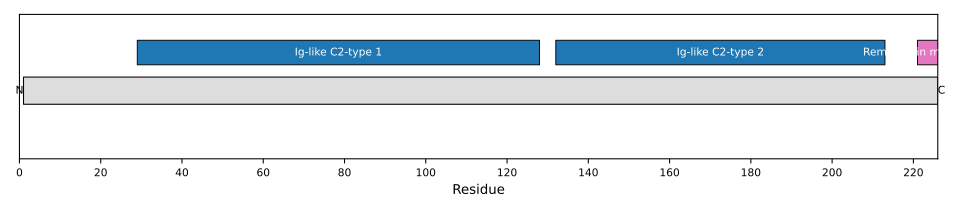
1: Glycosylphosphatidylinositol (GPI)-anchored cell surface glycoprotein that interacts via its N-terminal immunoglobulin domain with cell surface receptors including CD244/2B4 or CD2 to regulate immune cell function and activation (PubMed:12007789, PubMed:19494291, PubMed:27249817, PubMed:9841922). Participates in T-cell signaling transduction by associating with CD2 and efficiently bringing the Src family protein kinase LCK and LAT to the TCR/CD3 complex (PubMed:19494291). In turn, promotes LCK phosphorylation and subsequent activation (PubMed:12007789). Induces the phosphorylation of the cytoplasmic immunoreceptortyrosine switch motifs (ITSMs) of CD244 initiating a series of signaling events that leads to the generation of the immunological synapse and the directed release of cytolytic granules containing perforin and granzymes by T-lymphocytes and NK-cells (PubMed:27249817)