Secretin
1_MAPRP 6_ LLLLL 11_ LLLGG 16_ SAARP 21_ APPRA 26_ RRHSD 31_ GTFTS 36_ ELSRL 41_ REGAR 46_ LQRLL 51_ QGLVG 56_ KRSEQ 61_ DAENS 66_ MAWTR 71_ LSAGL 76_ LCPSG 81_ SNMPI 86_ LQAWM 91_ PLDGT 96_ WSPWL 101_ PPGPM 106_ VSEPA 111_ GAAAE 116_GTLRP
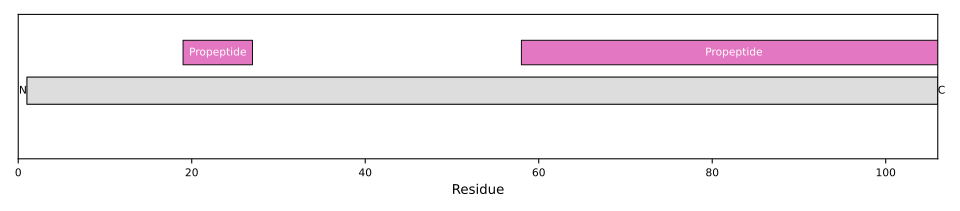
1: Hormone involved in different processes, such as regulation of the pH of the duodenal content, food intake and water homeostasis (PubMed:25332973). Exerts its biological effects by binding to secretin receptor (SCTR), a G-protein coupled receptor expressed in the basolateral domain of several cells (PubMed:25332973, PubMed:33008599, PubMed:32811827). Acts as a key gastrointestinal hormone by regulating the pH of the duodenal content (By similarity). Secreted by S cells of the duodenum in the crypts of Lieberkuehn and regulates the pH of the duodenum by (1) inhibiting the secretion of gastric acid from the parietal cells of the stomach and (2) stimulating the production of bicarbonate (NaHCO(3)) from the ductal cells of the pancreas (By similarity). Production of bicarbonate is essential to neutralize the pH and ensure no damage is done to the small intestine by the gastric acid (By similarity). In addition to regulating the pH of the duodenal content, plays a central role in diet induced thermogenesis: acts as a non-sympathetic brown fat (BAT) activator mediating prandial thermogenesis, which consequentially induces satiation (Probable). Mechanistically, secretin released by the gut after a meal binds to secretin receptor (SCTR) in brown adipocytes, activating brown fat thermogenesis by stimulating lipolysis, which is sensed in the brain and promotes satiation (By similarity). Also able to stimulate lipolysis in white adipocytes (By similarity). Also plays an important role in cellular osmoregulation: released into the systemic circulation in response to hyperosmolality and acts at different levels in the hypothalamus, pituitary and kidney to regulate water homeostasis (By similarity). Also plays a role in the central nervous system, possibly by acting as a neuropeptide hormone: required for hippocampal synaptic function and neural progenitor cells maintenance (By similarity)