Polyubiquitin-C [Cleaved into: Ubiquitin]
1_MQIFV 6_ KTLTG 11_ KTITL 16_ EVEPS 21_ DTIEN 26_ VKAKI 31_ QDKEG 36_ IPPDQ 41_ QRLIF 46_ AGKQL 51_ EDGRT 56_ LSDYN 61_ IQKES 66_ TLHLV 71_ LRLRG 76_ GMQIF 81_ VKTLT 86_ GKTIT 91_ LEVEP 96_ SDTIE 101_ NVKAK 106_ IQDKE 111_ GIPPD 116_ QQRLI 121_ FAGKQ 126_ LEDGR 131_ TLSDY 136_ NIQKE 141_ STLHL 146_ VLRLR 151_ GGMQI 156_ FVKTL 161_ TGKTI 166_ TLEVE 171_ PSDTI 176_ ENVKA 181_ KIQDK 186_ EGIPP 191_ DQQRL 196_ IFAGK 201_ QLEDG 206_ RTLSD 211_ YNIQK 216_ ESTLH 221_ LVLRL 226_ RGGMQ 231_ IFVKT 236_ LTGKT 241_ ITLEV 246_ EPSDT 251_ IENVK 256_ AKIQD 261_ KEGIP 266_ PDQQR 271_ LIFAG 276_ KQLED 281_ GRTLS 286_ DYNIQ 291_ KESTL 296_ HLVLR 301_ LRGGM 306_ QIFVK 311_ TLTGK 316_ TITLE 321_ VEPSD 326_ TIENV 331_ KAKIQ 336_ DKEGI 341_ PPDQQ 346_ RLIFA 351_ GKQLE 356_ DGRTL 361_ SDYNI 366_ QKEST 371_ LHLVL 376_ RLRGG 381_ MQIFV 386_ KTLTG 391_ KTITL 396_ EVEPS 401_ DTIEN 406_ VKAKI 411_ QDKEG 416_ IPPDQ 421_ QRLIF 426_ AGKQL 431_ EDGRT 436_ LSDYN 441_ IQKES 446_ TLHLV 451_ LRLRG 456_ GMQIF 461_ VKTLT 466_ GKTIT 471_ LEVEP 476_ SDTIE 481_ NVKAK 486_ IQDKE 491_ GIPPD 496_ QQRLI 501_ FAGKQ 506_ LEDGR 511_ TLSDY 516_ NIQKE 521_ STLHL 526_ VLRLR 531_ GGMQI 536_ FVKTL 541_ TGKTI 546_ TLEVE 551_ PSDTI 556_ ENVKA 561_ KIQDK 566_ EGIPP 571_ DQQRL 576_ IFAGK 581_ QLEDG 586_ RTLSD 591_ YNIQK 596_ ESTLH 601_ LVLRL 606_ RGGMQ 611_ IFVKT 616_ LTGKT 621_ ITLEV 626_ EPSDT 631_ IENVK 636_ AKIQD 641_ KEGIP 646_ PDQQR 651_ LIFAG 656_ KQLED 661_ GRTLS 666_ DYNIQ 671_ KESTL 676_HLVLR
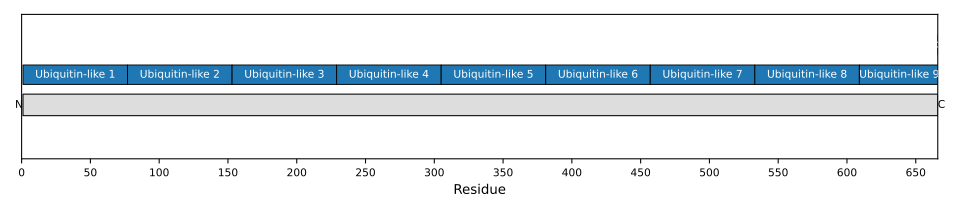
1: Exists either covalently attached to another protein, or free (unanchored). When covalently bound, it is conjugated to target proteins via an isopeptide bond either as a monomer (monoubiquitin), a polymer linked via different Lys residues of the ubiquitin (polyubiquitin chains) or a linear polymer linked via the initiator Met of the ubiquitin (linear polyubiquitin chains). Polyubiquitin chains, when attached to a target protein, have different functions depending on the Lys residue of the ubiquitin that is linked: Lys-6-linked may be involved in DNA repair; Lys-11-linked is involved in ERAD (endoplasmic reticulum-associated degradation) and in cell-cycle regulation; Lys-29-linked is involved in proteotoxic stress response and cell cycle; Lys-33-linked is involved in kinase modification; Lys-48-linked is involved in protein degradation via the proteasome; Lys-63-linked is involved in endocytosis, DNA-damage responses as well as in signaling processes leading to activation of the transcription factor NF-kappa-B. Linear polymer chains formed via attachment by the initiator Met lead to cell signaling. Ubiquitin is usually conjugated to Lys residues of target proteins, however, in rare cases, conjugation to Cys or Ser residues has been observed. When polyubiquitin is free (unanchored-polyubiquitin), it also has distinct roles, such as in activation of protein kinases, and in signaling. During ubiquitination, the acceptor ubiquitin is positioned in the active site via direct interaction with the E2 ubiquitin-conjugating enzymes such as UBE2R2 (PubMed:38326650). As a monoubiquitin, its C-terminal glycine is recognized as a C-degron by Cul2-RING (CRL2) E3 ubiquitin-protein ligase complexes (PubMed:39548056)