Probable non-functional immunoglobulin heavy variable 8-51-1
1_MLVCV 6_ LLYSF 11_ RLFGI 16_ QGEAQ 21_ LTESG 26_ GDLVH 31_ LEGPL 36_ RLSCA 41_ ASWFT 46_ FSIYE 51_ IHWVC 56_ QASGK 61_ GLEWV 66_ AVIWR 71_ GESHQ 76_ YNADY 81_ VRGRL 86_ TTSRD 91_ NTKYM 96_ LYMQM 101_ ISLRT 106_QNMAA
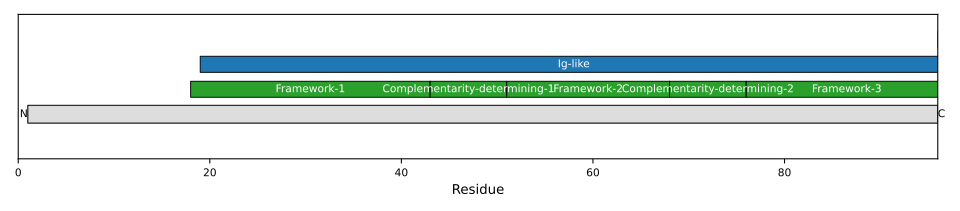
1: Probable non-functional open reading frame (ORF) of V region of the variable domain of immunoglobulin heavy chains (PubMed:24600447). Non-functional ORF generally cannot participate in the synthesis of a productive immunoglobulin chain due to altered V-(D)-J or switch recombination and/or splicing site (at mRNA level) and/or conserved amino acid change (protein level) (PubMed:9619395). Immunoglobulins, also known as antibodies, are membrane-bound or secreted glycoproteins produced by B lymphocytes. In the recognition phase of humoral immunity, the membrane-bound immunoglobulins serve as receptors which, upon binding of a specific antigen, trigger the clonal expansion and differentiation of B lymphocytes into immunoglobulins-secreting plasma cells. Secreted immunoglobulins mediate the effector phase of humoral immunity, which results in the elimination of bound antigens (PubMed:20176268, PubMed:22158414). The antigen binding site is formed by the variable domain of one heavy chain, together with that of its associated light chain. Thus, each immunoglobulin has two antigen binding sites with remarkable affinity for a particular antigen. The variable domains are assembled by a process called V-(D)-J rearrangement and can then be subjected to somatic hypermutations which, after exposure to antigen and selection, allow affinity maturation for a particular antigen (PubMed:17576170, PubMed:20176268, PubMed:22158414, PubMed:24600447)