T cell receptor alpha chain MC.7.G5 (MC.7.G5 TRA) (TR alpha chain TRAV38-2DV8*01J31*01C*01)
1_MACPG 6_ FLWAL 11_ VISTC 16_ LEFSM 21_ AQTVT 26_ QSQPE 31_ MSVQE 36_ AETVT 41_ LSCTY 46_ DTSES 51_ DYYLF 56_ WYKQP 61_ PSRQM 66_ ILVIR 71_ QEAYK 76_ QQNAT 81_ ENRFS 86_ VNFQK 91_ AAKSF 96_ SLKIS 101_ DSQLG 106_ DAAMY 111_ FCAYR 116_ SAVNA 121_ RLMFG 126_ DGTQL 131_ VVKPN 136_ IQNPD 141_ PAVYQ 146_ LRDSK 151_ SSDKS 156_ VCLFT 161_ DFDSQ 166_ TNVSQ 171_ SKDSD 176_ VYITD 181_ KTVLD 186_ MRSMD 191_ FKSNS 196_ AVAWS 201_ NKSDF 206_ ACANA 211_ FNNSI 216_ IPEDT 221_ FFPSP 226_ ESSCD 231_ VKLVE 236_ KSFET 241_ DTNLN 246_ FQNLS 251_ VIGFR 256_ ILLLK 261_ VAGFN 266_LLMTL
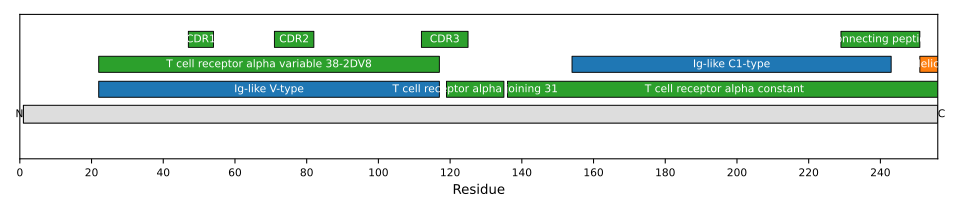
1: The alpha chain of TRAV38-2DV8*01J31*01C*01/TRBV25-1*01J2S3*01C2*01 alpha-beta T cell receptor (TR) clonotype that displays pan-cancer cell recognition via the invariant MR1 molecule. On CD8-positive T cell clone MC.7.G5, likely recognizes tumor-specific or -associated metabolite(s) essential for cancer cell survival, triggering killing of many cancer cell types including lung, melanoma, leukemia, colon, breast, prostate, bone and ovarian cancer cells. Mediates cancer cell cytotoxicity in an HLA-independent manner. Has no reactivity to healthy cells, even stressed or infected by bacteria (PubMed:31959982). Antigen recognition initiates TR-CD3 clustering on the cell surface and intracellular activation of LCK that phosphorylates the ITAM motifs of CD3G, CD3D, CD3E and CD247 enabling the recruitment of ZAP70. In turn, ZAP70 phosphorylates LAT, which recruits numerous signaling molecules to form the LAT signalosome. The LAT signalosome propagates signal branching to three major signaling pathways, the calcium, the mitogen-activated protein kinase (MAPK) kinase and the nuclear factor NF-kappa-B (NF-kB) pathways, leading to the mobilization of transcription factors that are critical for gene expression and essential for T cell differentiation into effector/memory T cells (By similarity)