Poliovirus receptor (Nectin-like protein 5) (NECL-5) (CD antigen CD155)
1_MARAM 6_ AAAWP 11_ LLLVA 16_ LLVLS 21_ WPPPG 26_ TGDVV 31_ VQAPT 36_ QVPGF 41_ LGDSV 46_ TLPCY 51_ LQVPN 56_ MEVTH 61_ VSQLT 66_ WARHG 71_ ESGSM 76_ AVFHQ 81_ TQGPS 86_ YSESK 91_ RLEFV 96_ AARLG 101_ AELRN 106_ ASLRM 111_ FGLRV 116_ EDEGN 121_ YTCLF 126_ VTFPQ 131_ GSRSV 136_ DIWLR 141_ VLAKP 146_ QNTAE 151_ VQKVQ 156_ LTGEP 161_ VPMAR 166_ CVSTG 171_ GRPPA 176_ QITWH 181_ SDLGG 186_ MPNTS 191_ QVPGF 196_ LSGTV 201_ TVTSL 206_ WILVP 211_ SSQVD 216_ GKNVT 221_ CKVEH 226_ ESFEK 231_ PQLLT 236_ VNLTV 241_ YYPPE 246_ VSISG 251_ YDNNW 256_ YLGQN 261_ EATLT 266_ CDARS 271_ NPEPT 276_ GYNWS 281_ TTMGP 286_ LPPFA 291_ VAQGA 296_ QLLIR 301_ PVDKP 306_ INTTL 311_ ICNVT 316_ NALGA 321_ RQAEL 326_ TVQVK 331_ EGPPS 336_ EHSGI 341_ SRNAI 346_ IFLVL 351_ GILVF 356_ LILLG 361_ IGIYF 366_ YWSKC 371_ SREVL 376_ WHCHL 381_ CPSST 386_ EHASA 391_ SANGH 396_ VSYSA 401_ VSREN 406_ SSSQD 411_PQTEG
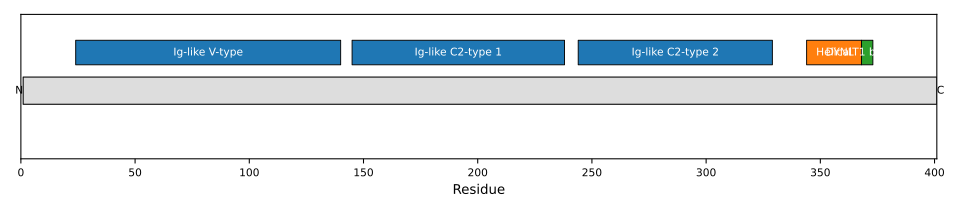
1: Mediates NK cell adhesion and triggers NK cell effector functions. Binds two different NK cell receptors: CD96 and CD226. These interactions accumulates at the cell-cell contact site, leading to the formation of a mature immunological synapse between NK cell and target cell. This may trigger adhesion and secretion of lytic granules and IFN-gamma and activate cytotoxicity of activated NK cells. May also promote NK cell-target cell modular exchange, and PVR transfer to the NK cell. This transfer is more important in some tumor cells expressing a lot of PVR, and may trigger fratricide NK cell activation, providing tumors with a mechanism of immunoevasion. Plays a role in mediating tumor cell invasion and migration
2: (Microbial infection) Acts as a receptor for poliovirus. May play a role in axonal transport of poliovirus, by targeting virion-PVR-containing endocytic vesicles to the microtubular network through interaction with DYNLT1. This interaction would drive the virus-containing vesicle to the axonal retrograde transport
3: (Microbial infection) Acts as a receptor for Pseudorabies virus
4: (Microbial infection) Is prevented to reach cell surface upon infection by Human cytomegalovirus /HHV-5, presumably to escape immune recognition of infected cell by NK cells