NAD(P)H dehydrogenase [quinone] 1 (EC 1.6.5.2) (Azoreductase) (DT-diaphorase) (DTD) (Menadione reductase) (NAD(P)H:quinone oxidoreductase 1) (Phylloquinone reductase) (Quinone reductase 1) (QR1)
1_MVGRR 6_ ALIVL 11_ AHSER 16_ TSFNY 21_ AMKEA 26_ AAAAL 31_ KKKGW 36_ EVVES 41_ DLYAM 46_ NFNPI 51_ ISRKD 56_ ITGKL 61_ KDPAN 66_ FQYPA 71_ ESVLA 76_ YKEGH 81_ LSPDI 86_ VAEQK 91_ KLEAA 96_ DLVIF 101_ QFPLQ 106_ WFGVP 111_ AILKG 116_ WFERV 121_ FIGEF 126_ AYTYA 131_ AMYDK 136_ GPFRS 141_ KKAVL 146_ SITTG 151_ GSGSM 156_ YSLQG 161_ IHGDM 166_ NVILW 171_ PIQSG 176_ ILHFC 181_ GFQVL 186_ EPQLT 191_ YSIGH 196_ TPADA 201_ RIQIL 206_ EGWKK 211_ RLENI 216_ WDETP 221_ LYFAP 226_ SSLFD 231_ LNFQA 236_ GFLMK 241_ KEVQD 246_ EEKNK 251_ KFGLS 256_ VGHHL 261_ GKSIP 266_TDNQI
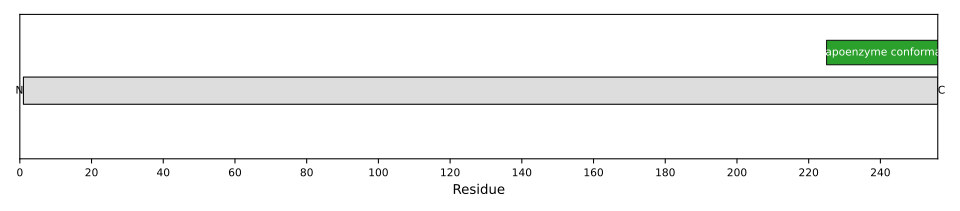
1: Flavin-containing quinone reductase that catalyzes two-electron reduction of quinones to hydroquinones using either NADH or NADPH as electron donors. In a ping-pong kinetic mechanism, the electrons are sequentially transferred from NAD(P)H to flavin cofactor and then from reduced flavin to the quinone, bypassing the formation of semiquinone and reactive oxygen species (By similarity) (PubMed:8999809, PubMed:9271353). Regulates cellular redox state primarily through quinone detoxification. Reduces components of plasma membrane redox system such as coenzyme Q and vitamin quinones, producing antioxidant hydroquinone forms. In the process may function as superoxide scavenger to prevent hydroquinone oxidation and facilitate excretion (PubMed:15102952, PubMed:8999809, PubMed:9271353). Alternatively, can activate quinones and their derivatives by generating redox reactive hydroquinones with DNA cross-linking antitumor potential (PubMed:8999809). Acts as a gatekeeper of the core 20S proteasome known to degrade proteins with unstructured regions. Upon oxidative stress, interacts with tumor suppressors TP53 and TP73 in a NADH-dependent way and inhibits their ubiquitin-independent degradation by the 20S proteasome (PubMed:15687255, PubMed:28291250)