CCAAT/enhancer-binding protein beta (C/EBP beta) (Liver activator protein) (LAP) (Liver-enriched inhibitory protein) (LIP) (Nuclear factor NF-IL6) (Transcription factor 5) (TCF-5)
1_MQRLV 6_ AWDPA 11_ CLPLP 16_ PPPPA 21_ FKSME 26_ VANFY 31_ YEADC 36_ LAAAY 41_ GGKAA 46_ PAAPP 51_ AARPG 56_ PRPPA 61_ GELGS 66_ IGDHE 71_ RAIDF 76_ SPYLE 81_ PLGAP 86_ QAPAP 91_ ATATD 96_ TFEAA 101_ PPAPA 106_ PAPAS 111_ SGQHH 116_ DFLSD 121_ LFSDD 126_ YGGKN 131_ CKKPA 136_ EYGYV 141_ SLGRL 146_ GAAKG 151_ ALHPG 156_ CFAPL 161_ HPPPP 166_ PPPPP 171_ AELKA 176_ EPGFE 181_ PADCK 186_ RKEEA 191_ GAPGG 196_ GAGMA 201_ AGFPY 206_ ALRAY 211_ LGYQA 216_ VPSGS 221_ SGSLS 226_ TSSSS 231_ SPPGT 236_ PSPAD 241_ AKAPP 246_ TACYA 251_ GAAPA 256_ PSQVK 261_ SKAKK 266_ TVDKH 271_ SDEYK 276_ IRRER 281_ NNIAV 286_ RKSRD 291_ KAKMR 296_ NLETQ 301_ HKVLE 306_ LTAEN 311_ ERLQK 316_ KVEQL 321_ SRELS 326_ TLRNL 331_ FKQLP 336_EPLLA
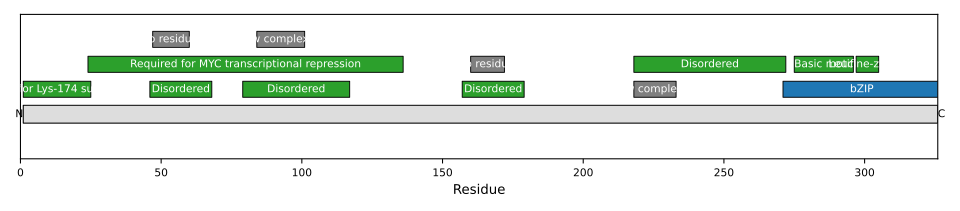
1: Important transcription factor regulating the expression of genes involved in immune and inflammatory responses (PubMed:12048245, PubMed:1741402, PubMed:18647749, PubMed:9374525). Also plays a significant role in adipogenesis, as well as in the gluconeogenic pathway, liver regeneration, and hematopoiesis. The consensus recognition site is 5'-T[TG]NNGNAA[TG]-3'. Its functional capacity is governed by protein interactions and post-translational protein modifications. During early embryogenesis, plays essential and redundant roles with CEBPA. Has a promitotic effect on many cell types such as hepatocytes and adipocytes but has an antiproliferative effect on T-cells by repressing MYC expression, facilitating differentiation along the T-helper 2 lineage. Binds to regulatory regions of several acute-phase and cytokines genes and plays a role in the regulation of acute-phase reaction and inflammation. Also plays a role in intracellular bacteria killing (By similarity). During adipogenesis, is rapidly expressed and, after activation by phosphorylation, induces CEBPA and PPARG, which turn on the series of adipocyte genes that give rise to the adipocyte phenotype. The delayed transactivation of the CEBPA and PPARG genes by CEBPB appears necessary to allow mitotic clonal expansion and thereby progression of terminal differentiation (PubMed:20829347). Essential for female reproduction because of a critical role in ovarian follicle development (By similarity). Restricts osteoclastogenesis: together with NFE2L1; represses expression of DSPP during odontoblast differentiation (By similarity)
2: Essential for gene expression induction in activated macrophages. Plays a major role in immune responses such as CD4(+) T-cell response, granuloma formation and endotoxin shock. Not essential for intracellular bacteria killing
3: Acts as a dominant negative through heterodimerization with isoform 2 (PubMed:11741938). Promotes osteoblast differentiation and osteoclastogenesis (By similarity)