Insulin-like growth factor-binding protein 3 (IBP-3) (IGF-binding protein 3) (IGFBP-3)
1_MQRAR 6_ PTLWA 11_ AALTL 16_ LVLLR 21_ GPPVA 26_ RAGAS 31_ SAGLG 36_ PVVRC 41_ EPCDA 46_ RALAQ 51_ CAPPP 56_ AVCAE 61_ LVREP 66_ GCGCC 71_ LTCAL 76_ SEGQP 81_ CGIYT 86_ ERCGS 91_ GLRCQ 96_ PSPDE 101_ ARPLQ 106_ ALLDG 111_ RGLCV 116_ NASAV 121_ SRLRA 126_ YLLPA 131_ PPAPG 136_ NASES 141_ EEDRS 146_ AGSVE 151_ SPSVS 156_ STHRV 161_ SDPKF 166_ HPLHS 171_ KIIII 176_ KKGHA 181_ KDSQR 186_ YKVDY 191_ ESQST 196_ DTQNF 201_ SSESK 206_ RETEY 211_ GPCRR 216_ EMEDT 221_ LNHLK 226_ FLNVL 231_ SPRGV 236_ HIPNC 241_ DKKGF 246_ YKKKQ 251_ CRPSK 256_ GRKRG 261_ FCWCV 266_ DKYGQ 271_ PLPGY 276_ TTKGK 281_ EDVHC 286_YSMQS
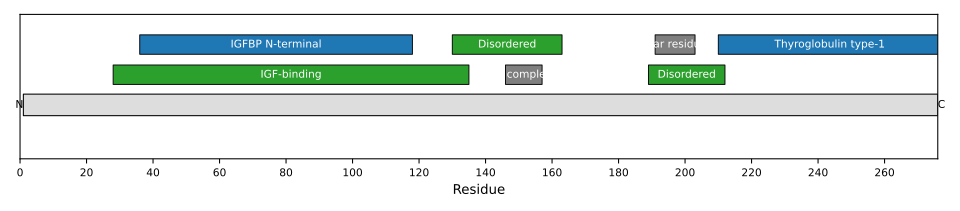
1: Multifunctional protein that plays a critical role in regulating the availability of IGFs such as IGF1 and IGF2 to their receptors and thereby regulates IGF-mediated cellular processes including proliferation, differentiation, and apoptosis in a cell-type specific manner (PubMed:10874028, PubMed:19556345). Also exhibits IGF-independent antiproliferative and apoptotic effects mediated by its receptor TMEM219/IGFBP-3R (PubMed:20353938). Inhibits the positive effect of humanin on insulin sensitivity (PubMed:19623253). Promotes testicular germ cell apoptosis (PubMed:19952275). Acts via LRP-1/alpha2M receptor, also known as TGF-beta type V receptor, to mediate cell growth inhibition independent of IGF1 (PubMed:9252371). Mechanistically, induces serine-specific dephosphorylation of IRS1 or IRS2 upon ligation to its receptor, leading to the inhibitory cascade (PubMed:15371331). In the nucleus, interacts with transcription factors such as retinoid X receptor-alpha/RXRA to regulate transcriptional signaling and apoptosis (PubMed:10874028)