Ras-related protein Rab-3A
1_MASAT 6_ DSRYG 11_ QKESS 16_ DQNFD 21_ YMFKI 26_ LIIGN 31_ SSVGK 36_ TSFLF 41_ RYADD 46_ SFTPA 51_ FVSTV 56_ GIDFK 61_ VKTIY 66_ RNDKR 71_ IKLQI 76_ WDTAG 81_ QERYR 86_ TITTA 91_ YYRGA 96_ MGFIL 101_ MYDIT 106_ NEESF 111_ NAVQD 116_ WSTQI 121_ KTYSW 126_ DNAQV 131_ LLVGN 136_ KCDME 141_ DERVV 146_ SSERG 151_ RQLAD 156_ HLGFE 161_ FFEAS 166_ AKDNI 171_ NVKQT 176_ FERLV 181_ DVICE 186_ KMSES 191_ LDTAD 196_ PAVTG 201_ AKQGP 206_ QLSDQ 211_QVPPH
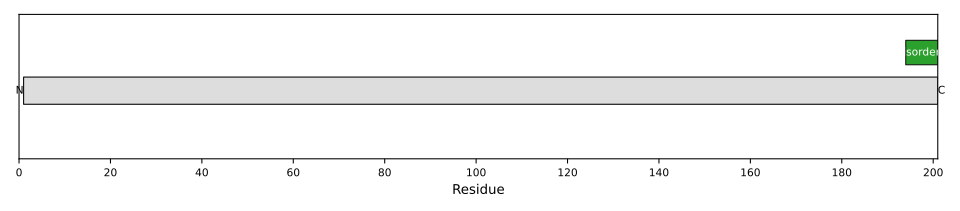
1: The small GTPases Rab are key regulators of intracellular membrane trafficking, from the formation of transport vesicles to their fusion with membranes (PubMed:2501306). Rabs cycle between an inactive GDP-bound form and an active GTP-bound form that is able to recruit to membranes different sets of downstream effectors directly responsible for vesicle formation, movement, tethering and fusion (PubMed:2501306). RAB3A plays a central role in regulated exocytosis and secretion. Controls the recruitment, tethering and docking of secretory vesicles to the plasma membrane (PubMed:2501306). Upon stimulation, switches to its active GTP-bound form, cycles to vesicles and recruits effectors such as RIMS1, RIMS2, Rabphilin-3A/RPH3A, RPH3AL or SYTL4 to help the docking of vesicules onto the plasma membrane (By similarity). Upon GTP hydrolysis by GTPase-activating protein, dissociates from the vesicle membrane allowing the exocytosis to proceed (By similarity). Stimulates insulin secretion through interaction with RIMS2 or RPH3AL effectors in pancreatic beta cells (By similarity). Regulates calcium-dependent lysosome exocytosis and plasma membrane repair (PMR) via the interaction with 2 effectors, SYTL4 and myosin-9/MYH9 (PubMed:27325790). Acts as a positive regulator of acrosome content secretion in sperm cells by interacting with RIMS1 (PubMed:22248876, PubMed:30599141). Also plays a role in the regulation of dopamine release by interacting with synaptotagmin I/SYT (By similarity)