Ephrin-A1 (EPH-related receptor tyrosine kinase ligand 1) (LERK-1) (Immediate early response protein B61) (Tumor necrosis factor alpha-induced protein 4) (TNF alpha-induced protein 4) [Cleaved into: Ephrin-A1, secreted form]
1_MEFLW 6_ APLLG 11_ LCCSL 16_ AAADR 21_ HTVFW 26_ NSSNP 31_ KFRNE 36_ DYTIH 41_ VQLND 46_ YVDII 51_ CPHYE 56_ DHSVA 61_ DAAME 66_ QYILY 71_ LVEHE 76_ EYQLC 81_ QPQSK 86_ DQVRW 91_ QCNRP 96_ SAKHG 101_ PEKLS 106_ EKFQR 111_ FTPFT 116_ LGKEF 121_ KEGHS 126_ YYYIS 131_ KPIHQ 136_ HEDRC 141_ LRLKV 146_ TVSGK 151_ ITHSP 156_ QAHDN 161_ PQEKR 166_ LAADD 171_ PEVRV 176_ LHSIG 181_ HSAAP 186_ RLFPL 191_ AWTVL 196_LLPLL
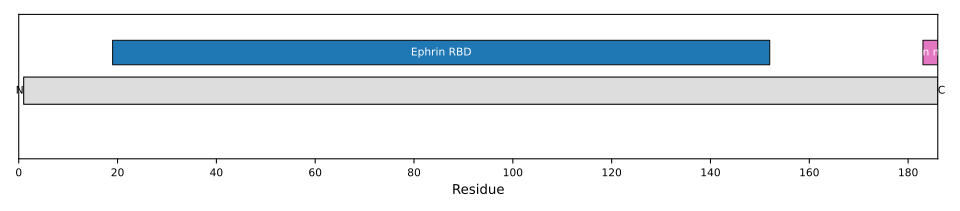
1: Cell surface GPI-bound ligand for Eph receptors, a family of receptor tyrosine kinases which are crucial for migration, repulsion and adhesion during neuronal, vascular and epithelial development. Binds promiscuously Eph receptors residing on adjacent cells, leading to contact-dependent bidirectional signaling into neighboring cells. Plays an important role in angiogenesis and tumor neovascularization. The recruitment of VAV2, VAV3 and PI3-kinase p85 subunit by phosphorylated EPHA2 is critical for EFNA1-induced RAC1 GTPase activation and vascular endothelial cell migration and assembly. Exerts anti-oncogenic effects in tumor cells through activation and down-regulation of EPHA2. Activates EPHA2 by inducing tyrosine phosphorylation which leads to its internalization and degradation. Acts as a negative regulator in the tumorigenesis of gliomas by down-regulating EPHA2 and FAK. Can evoke collapse of embryonic neuronal growth cone and regulates dendritic spine morphogenesis