cAMP-dependent protein kinase catalytic subunit beta (PKA C-beta) (EC 2.7.11.11)
1_MGNAA 6_ TAKKG 11_ SEVES 16_ VKEFL 21_ AKAKE 26_ DFLKK 31_ WENPT 36_ QNNAG 41_ LEDFE 46_ RKKTL 51_ GTGSF 56_ GRVML 61_ VKHKA 66_ TEQYY 71_ AMKIL 76_ DKQKV 81_ VKLKQ 86_ IEHTL 91_ NEKRI 96_ LQAVN 101_ FPFLV 106_ RLEYA 111_ FKDNS 116_ NLYMV 121_ MEYVP 126_ GGEMF 131_ SHLRR 136_ IGRFS 141_ EPHAR 146_ FYAAQ 151_ IVLTF 156_ EYLHS 161_ LDLIY 166_ RDLKP 171_ ENLLI 176_ DHQGY 181_ IQVTD 186_ FGFAK 191_ RVKGR 196_ TWTLC 201_ GTPEY 206_ LAPEI 211_ ILSKG 216_ YNKAV 221_ DWWAL 226_ GVLIY 231_ EMAAG 236_ YPPFF 241_ ADQPI 246_ QIYEK 251_ IVSGK 256_ VRFPS 261_ HFSSD 266_ LKDLL 271_ RNLLQ 276_ VDLTK 281_ RFGNL 286_ KNGVS 291_ DIKTH 296_ KWFAT 301_ TDWIA 306_ IYQRK 311_ VEAPF 316_ IPKFR 321_ GSGDT 326_ SNFDD 331_ YEEED 336_ IRVSI 341_ TEKCA 346_KEFGE
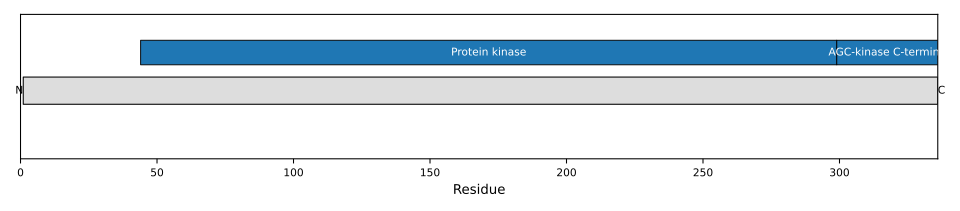
1: Mediates cAMP-dependent signaling triggered by receptor binding to GPCRs (PubMed:12420224, PubMed:21423175, PubMed:31112131). PKA activation regulates diverse cellular processes such as cell proliferation, the cell cycle, differentiation and regulation of microtubule dynamics, chromatin condensation and decondensation, nuclear envelope disassembly and reassembly, as well as regulation of intracellular transport mechanisms and ion flux (PubMed:12420224, PubMed:21423175). Regulates the abundance of compartmentalized pools of its regulatory subunits through phosphorylation of PJA2 which binds and ubiquitinates these subunits, leading to their subsequent proteolysis (PubMed:12420224, PubMed:21423175). Phosphorylates GPKOW which regulates its ability to bind RNA (PubMed:21880142). Acts as a negative regulator of mTORC1 by mediating phosphorylation of RPTOR (PubMed:31112131)