Brain-derived neurotrophic factor (BDNF) (Abrineurin) [Cleaved into: BDNF precursor form (ProBDNF)]
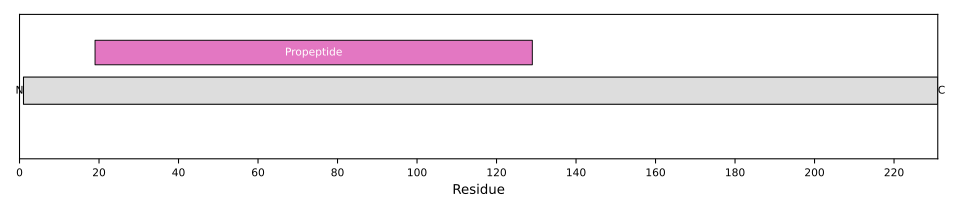
1_MTILF 6_ LTMVI 11_ SYFGC 16_ MKAAP 21_ MKEAN 26_ IRGQG 31_ GLAYP 36_ GVRTH 41_ GTLES 46_ VNGPK 51_ AGSRG 56_ LTSLA 61_ DTFEH 66_ VIEEL 71_ LDEDQ 76_ KVRPN 81_ EENNK 86_ DADLY 91_ TSRVM 96_ LSSQV 101_ PLEPP 106_ LLFLL 111_ EEYKN 116_ YLDAA 121_ NMSMR 126_ VRRHS 131_ DPARR 136_ GELSV 141_ CDSIS 146_ EWVTA 151_ ADKKT 156_ AVDMS 161_ GGTVT 166_ VLEKV 171_ PVSKG 176_ QLKQY 181_ FYETK 186_ CNPMG 191_ YTKEG 196_ CRGID 201_ KRHWN 206_ SQCRT 211_ TQSYV 216_ RALTM 221_ DSKKR 226_ IGWRF 231_ IRIDT 236_ SCVCT 241_LTIKR
1: Important signaling molecule that activates signaling cascades downstream of NTRK2 (PubMed:11152678). During development, promotes the survival and differentiation of selected neuronal populations of the peripheral and central nervous systems. Participates in axonal growth, pathfinding and in the modulation of dendritic growth and morphology. Major regulator of synaptic transmission and plasticity at adult synapses in many regions of the CNS. The versatility of BDNF is emphasized by its contribution to a range of adaptive neuronal responses including long-term potentiation (LTP), long-term depression (LTD), certain forms of short-term synaptic plasticity, as well as homeostatic regulation of intrinsic neuronal excitability
2: Important signaling molecule that activates signaling cascades downstream of NTRK2. Activates signaling cascades via the heterodimeric receptor formed by NGFR and SORCS2 (PubMed:24908487, PubMed:29909994). Signaling via NGFR and SORCS2 plays a role in synaptic plasticity and long-term depression (LTD). Binding to NGFR and SORCS2 promotes neuronal apoptosis. Promotes neuronal growth cone collapse (By similarity)