Atypical chemokine receptor 3 (C-X-C chemokine receptor type 7) (CXC-R7) (CXCR-7) (Chemokine orphan receptor 1) (G-protein coupled receptor 159) (G-protein coupled receptor RDC1 homolog) (RDC-1)
1_MDLHL 6_ FDYSE 11_ PGNFS 16_ DISWP 21_ CNSSD 26_ CIVVD 31_ TVMCP 36_ NMPNK 41_ SVLLY 46_ TLSFI 51_ YIFIF 56_ VIGMI 61_ ANSVV 66_ VWVNI 71_ QAKTT 76_ GYDTH 81_ CYILN 86_ LAIAD 91_ LWVVL 96_ TIPVW 101_ VVSLV 106_ QHNQW 111_ PMGEL 116_ TCKVT 121_ HLIFS 126_ INLFG 131_ SIFFL 136_ TCMSV 141_ DRYLS 146_ ITYFT 151_ NTPSS 156_ RKKMV 161_ RRVVC 166_ ILVWL 171_ LAFCV 176_ SLPDT 181_ YYLKT 186_ VTSAS 191_ NNETY 196_ CRSFY 201_ PEHSI 206_ KEWLI 211_ GMELV 216_ SVVLG 221_ FAVPF 226_ SIIAV 231_ FYFLL 236_ ARAIS 241_ ASSDQ 246_ EKHSS 251_ RKIIF 256_ SYVVV 261_ FLVCW 266_ LPYHV 271_ AVLLD 276_ IFSIL 281_ HYIPF 286_ TCRLE 291_ HALFT 296_ ALHVT 301_ QCLSL 306_ VHCCV 311_ NPVLY 316_ SFINR 321_ NYRYE 326_ LMKAF 331_ IFKYS 336_ AKTGL 341_ TKLID 346_ ASRVS 351_ ETEYS 356_ALEQS
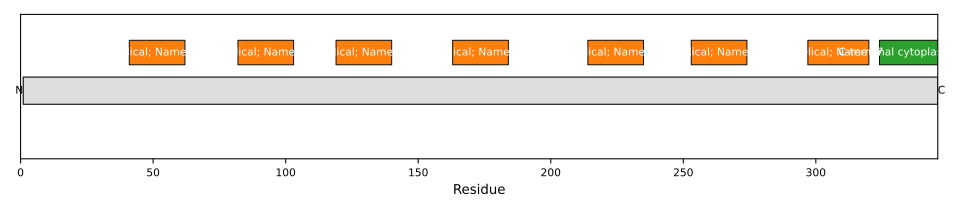
1: Atypical chemokine receptor that controls chemokine levels and localization via high-affinity chemokine binding that is uncoupled from classic ligand-driven signal transduction cascades, resulting instead in chemokine sequestration, degradation, or transcytosis. Also known as interceptor (internalizing receptor) or chemokine-scavenging receptor or chemokine decoy receptor. Acts as a receptor for chemokines CXCL11 and CXCL12/SDF1 (PubMed:16107333, PubMed:19255243, PubMed:19380869, PubMed:20161793, PubMed:22300987). Chemokine binding does not activate G-protein-mediated signal transduction but instead induces beta-arrestin recruitment, leading to ligand internalization and activation of MAPK signaling pathway (PubMed:16940167, PubMed:18653785, PubMed:20018651). Required for regulation of CXCR4 protein levels in migrating interneurons, thereby adapting their chemokine responsiveness (PubMed:16940167, PubMed:18653785). In glioma cells, transduces signals via MEK/ERK pathway, mediating resistance to apoptosis. Promotes cell growth and survival (PubMed:16940167, PubMed:20388803). Not involved in cell migration, adhesion or proliferation of normal hematopoietic progenitors but activated by CXCL11 in malignant hemapoietic cells, leading to phosphorylation of ERK1/2 (MAPK3/MAPK1) and enhanced cell adhesion and migration (PubMed:17804806, PubMed:18653785, PubMed:19641136, PubMed:20887389). Plays a regulatory role in CXCR4-mediated activation of cell surface integrins by CXCL12 (PubMed:18653785). Required for heart valve development (PubMed:17804806). Regulates axon guidance in the oculomotor system through the regulation of CXCL12 levels (PubMed:31211835)
2: (Microbial infection) Acts as a coreceptor with CXCR4 for a restricted number of HIV isolates